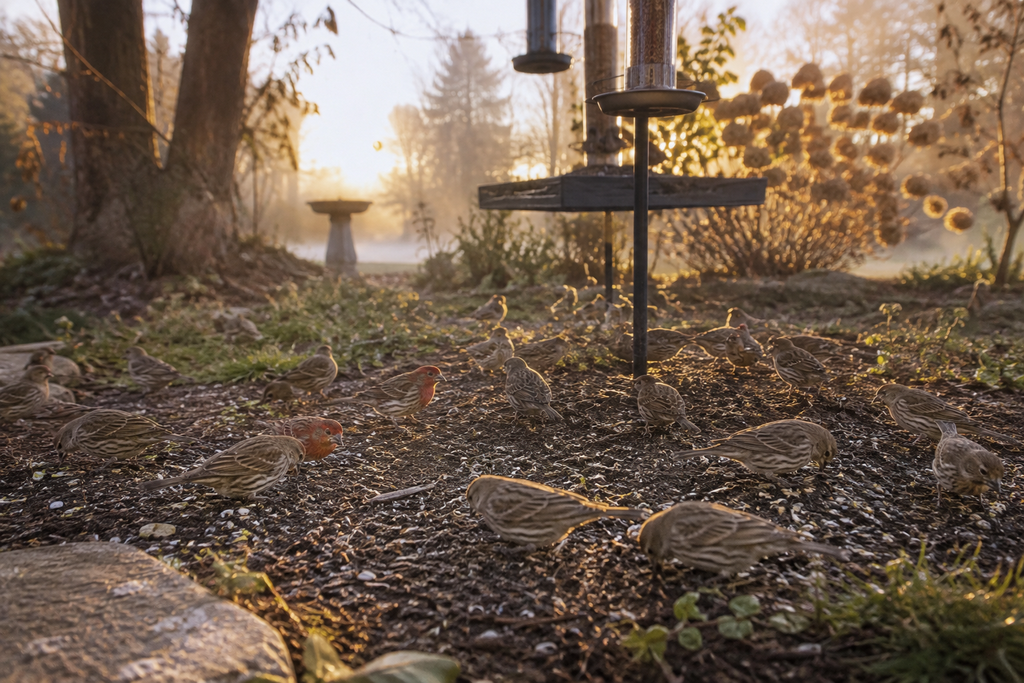
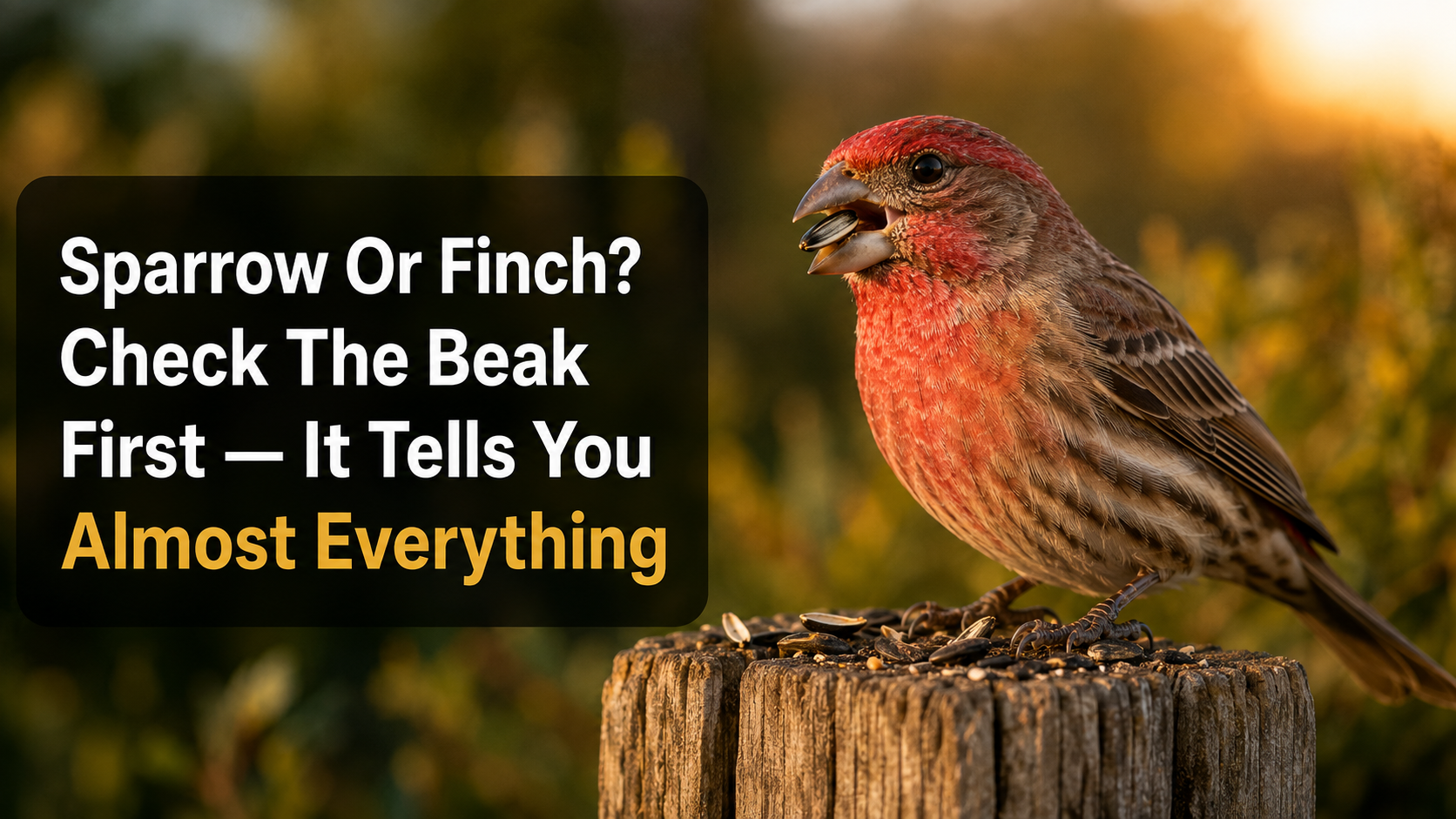
The fastest way to tell a sparrow from a finch is to check the beak first. A finch’s bill is thick and conical, built for cracking seed husks; a sparrow’s bill tapers to a finer point for a mixed diet of seed and insects. If the beak doesn’t settle it, color points to finch (reds, yellows, oranges) and bold face stripes point to sparrow.
A small brown bird lands on the feeder rail. You glance up from your coffee, register “sparrow,” and go back to your phone. Except it wasn’t a sparrow. It was a female House Finch, and you’ve just misfiled her — along with a good chunk of the birds that show up at backyard feeders across the country.
This mix-up isn’t really about bad eyesight. Sparrows and finches overlap in size, in habit, in that stubborn brown-and-streaky color palette that makes half of North America’s small birds look interchangeable at a glance. Both groups eat seed. Both show up in the same hedgerows and parking-lot shrubs. Both are, frankly, kind of beige. But once you know where to look, the two families stop blurring together — and a bird that used to be background noise starts turning into someone you actually recognize.
How Can You Tell a Finch From a Sparrow by Looking at the Beak?
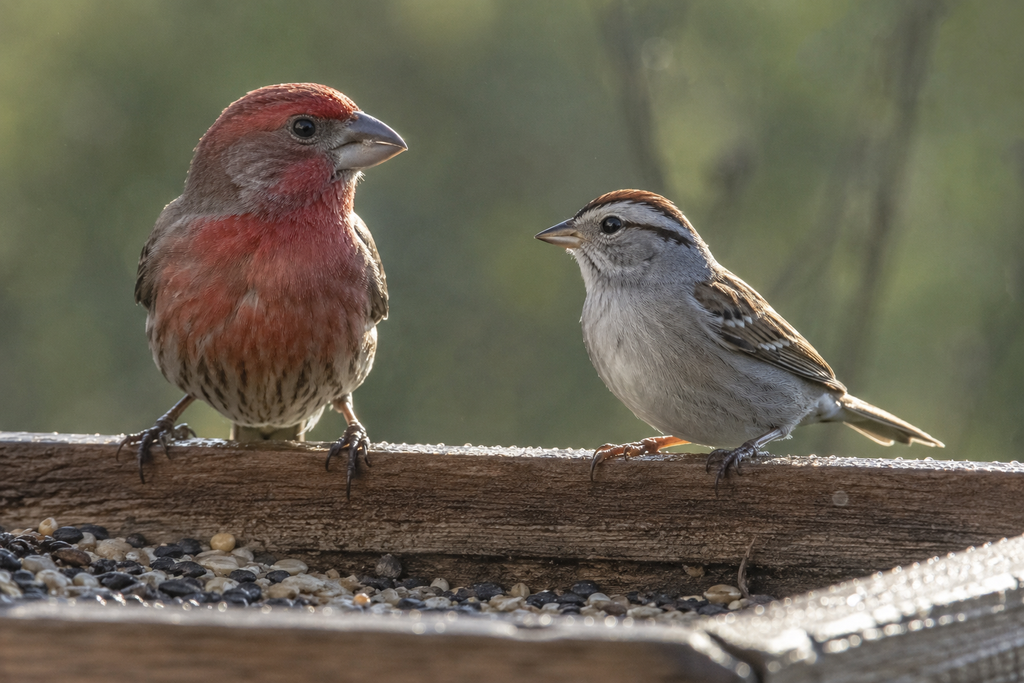
Look at the bill in profile. A finch’s beak is thick, conical, and slightly swollen — built like a nutcracker for splitting tough seed husks. A sparrow’s beak is finer and comes to more of a point. This one field mark sorts most backyard birds correctly in under three seconds, though a few finches, like the Pine Siskin, bend the rule with a thinner, sparrow-like bill.
That trick works because it’s tied to diet, not fashion. Finches, in the family Fringillidae, are seed specialists — House Finches, goldfinches, Purple Finches — and their whole skull is basically built around that one thick bill. Sparrows eat plenty of seed too, but they also pick off insects, especially in summer, and a finer bill handles that mixed diet better.
The exception worth knowing: Pine Siskins. They’re true finches, streaky and brown enough to fool anyone, but their bill is thin and needle-like, built for prying seeds out of conifer cones rather than cracking sunflower shells. If the beak says sparrow but everything else about the bird screams finch, siskin is a good guess.
What Colors Separate Finches From Sparrows?
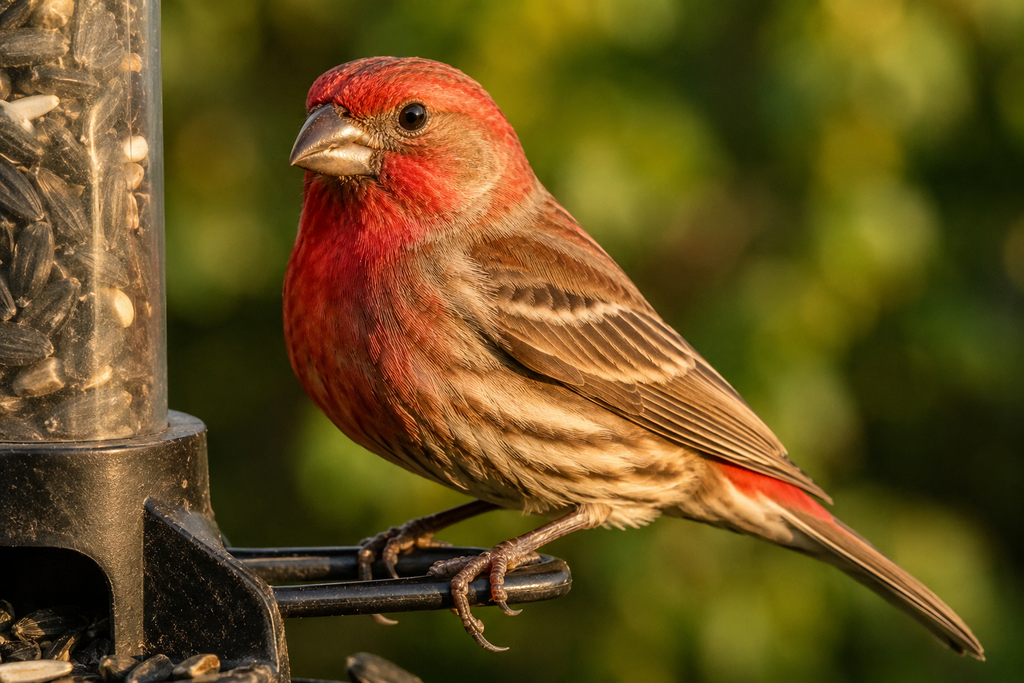
Finches lean on color. Male House Finches show red, orange, or dull yellow across the head, chest, and rump, depending on what carotenoids they ate as juveniles. American Goldfinches turn lemon yellow for breeding season, and Purple Finches wear a raspberry wash over the head. Female finches stay plainer but still show less heavy streaking than most sparrows, which lean brown, rufous, and gray instead.
That red isn’t fixed, either. It comes from carotenoid pigments in whatever the bird ate growing up, which is why you’ll sometimes spot a dull orange-yellow male House Finch instead of the classic raspberry-red one. Better diet, brighter bird — one of the few field marks in the whole avian world that doubles as a report card. Sparrows don’t play that game. Their color budget goes almost entirely into brown, rufous, and gray, saved up instead for pattern rather than pigment.
How Do You Identify a Sparrow by Its Face Pattern?
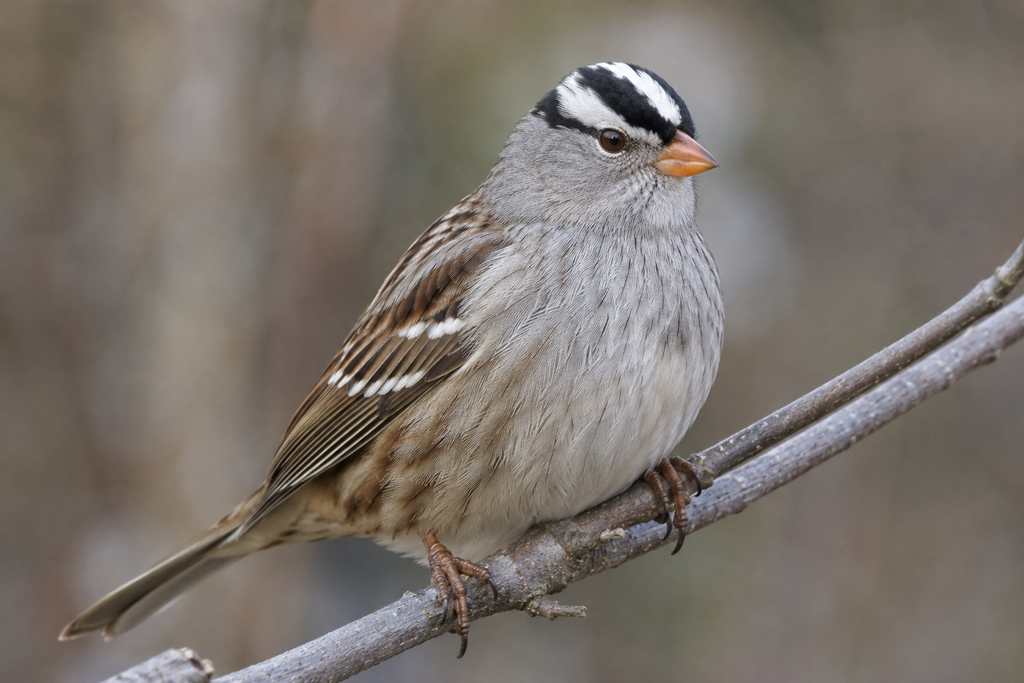
Sparrows rely on face markings more than color. Look for crown stripes, a pale eyebrow line called a supercilium, and a dark whisker mark below the eye called a moustachial stripe. These patterns are usually bold enough to see from several feet away, even on a plain brown bird. House Sparrows break the pattern slightly, showing a gray cap with cinnamon sides and unmarked lores instead of dramatic stripes.
Once you start looking for a supercilium and a moustachial stripe, you can’t stop seeing them. A White-crowned Sparrow practically shouts its ID with bold black-and-white racing stripes down the crown. A Song Sparrow carries a dark central breast spot most finches never bother with. Even the plainest little brown bird usually has some version of this facial geometry, if you get close enough or your binoculars are steady enough.
House Sparrows complicate the naming a little, though — and that’s worth sitting with, because it points to the bigger twist in this whole story.
Why the Mix-Up Isn’t Really Your Fault
Here’s the part that would’ve saved you some confusion years ago: the House Sparrow isn’t a true sparrow at all. It belongs to Passeridae, the Old World sparrow family, brought to North America from Europe in the 1850s. Real American sparrows — Song, Chipping, White-throated, and the rest — sit in a completely different family, Passerellidae. True finches, meanwhile, are Fringillidae. Three separate family trees, one shared common name, and a couple centuries of birders calling all of them “sparrows” out of habit.
So the confusion at your feeder isn’t a personal failing. It’s baked into the names themselves. The fix takes about three seconds once you know it: check the beak first, let color settle the finch question, and let face pattern settle the sparrow question. Do that a few times and you’ll never see “small brown bird” the same way again — you’ll see a House Finch working through a rough molt, or a Chipping Sparrow with its rusty summer cap, standing right there in plain sight the whole time.