Most birds can be identified in under 30 seconds using three checks, run in order: overall size and shape, one standout marking, and how the bird is moving. Skip straight to color and you’ll be flipping through a field guide for ten minutes; run the three in sequence and you usually have your answer before the bird leaves the branch.
Something lands on the fence post while you’re pouring coffee. Gray-brown, roughly robin-sized, gone in four seconds. By the time you’ve grabbed your phone it’s a memory, not a photo, and you’re left trying to reconstruct a bird out of a blur. This happens to every birder, beginner or not. Birds are under no obligation to sit still for your convenience.
The instinct is to reach for color first. That’s the trap. Color is the least reliable thing you can lean on — it shifts with light, with molt, with the angle the bird happens to be sitting at, and half the species in any field guide come in three or four color variations before you even get to juveniles. What doesn’t change nearly as fast is shape. A chunky little bird on a fence post gives away more in half a second than its plumage will in a full minute of squinting.
So here’s the order that actually holds up in the field: shape first, then exactly one mark, then movement. Not five things. Three.
What’s the First Thing to Check When Identifying a Bird?
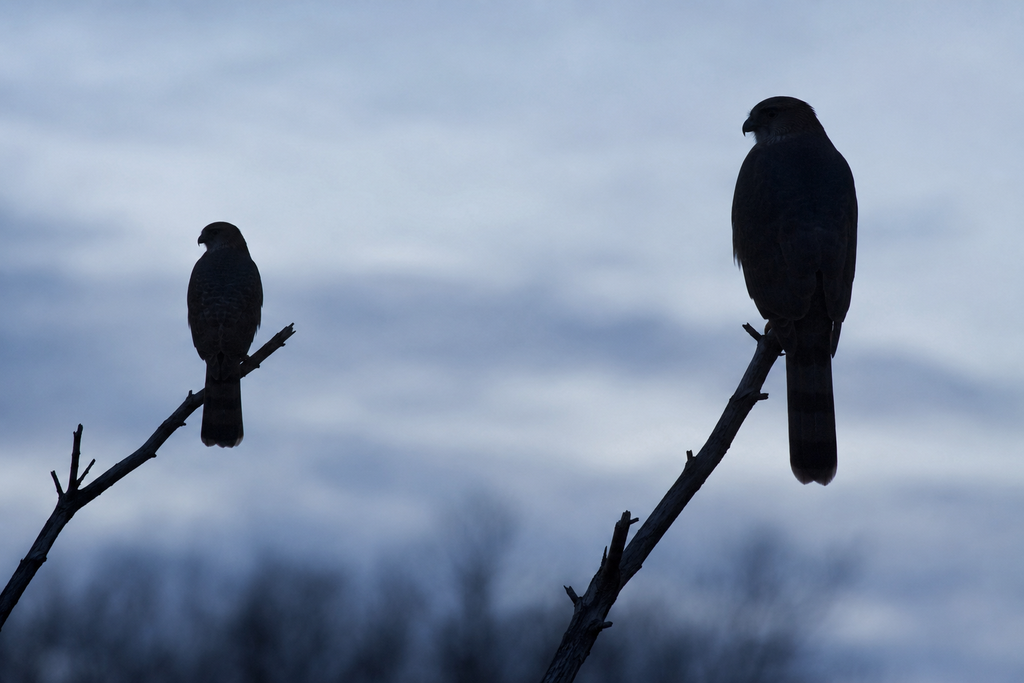
Check the bird’s overall size and shape before anything else. Compare it to a familiar reference such as a sparrow, robin, crow, or goose, then look at bill length, tail length, and posture. Shape holds up in bad light, at a distance, and in silhouette, while color shifts with light, molt, and age. A Cooper’s Hawk and a Sharp-shinned Hawk, for example, are told apart by head and leg proportions long before their markings are visible.
Before you notice a single feather, notice the outline. Big or small? Compare it to something you already know cold — sparrow, robin, crow, goose — and you’ve already cut the possibilities down by more than half. Then look at proportions: is the bill short and stubby or long and thin, does the tail trail out behind the body or barely exist, is the bird upright and alert-looking or hunched low over the branch.
This is what experienced birders mean when they talk about GISS — general impression, size, and shape — sometimes just called “jizz,” an old term that predates the acronym.
It’s the reason a Cooper’s Hawk and a Sharp-shinned Hawk can be told apart at highway speed by people who never got a clean look at either one’s chest markings. The Sharp-shinned has a small, rounded head that barely projects past its shoulders and skinny legs; the Cooper’s has a blockier head, a thicker neck, and a longer tail that reads differently in flight. Neither of those is a color. Both are shape.
The same trick separates a Downy Woodpecker from a Hairy Woodpecker, two birds that wear almost identical black-and-white plumage and confuse beginners constantly. Line them up side by side and the plumage tells you nothing useful. The bill does. A Downy’s bill is short and stubby, maybe a third the length of its head; a Hairy’s is nearly as long as its whole head, a small but consistent difference that holds even when you can’t make out a single feather pattern. Structure again, not color.
Shape holds up even when the light is bad, even in silhouette, even when the bird is a hundred yards off and moving. That’s why it goes first.
What Field Mark Should You Look For After Checking Shape?
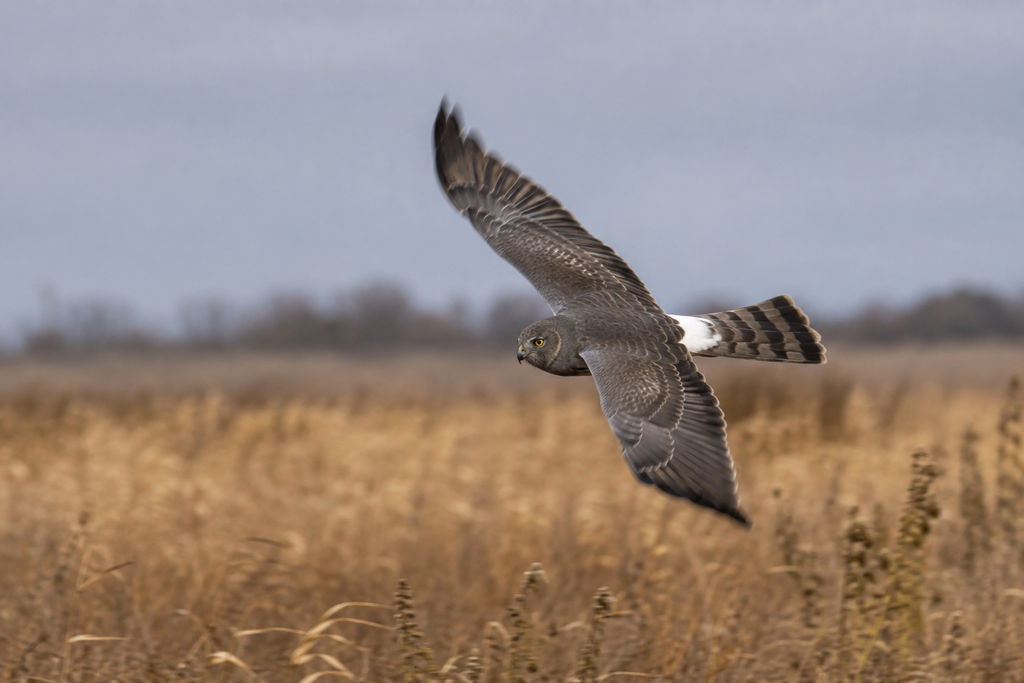
Once shape narrows the possibilities, look for exactly one strong, specific marking rather than trying to catalog every detail on the bird. A white rump patch identifies a Northern Harrier in flight, a bright yellow rump marks the warbler birders nickname the butterbutt, and a rusty cap separates a Chipping Sparrow from similar-looking sparrows. Pick the mark that’s genuinely unusual, not simply the one that’s easiest to see.
Once you’ve got a rough shape narrowed to a handful of candidates, resist the urge to catalog every stripe and smudge on the bird. You don’t have time, and most of it won’t help you anyway. Instead, look for exactly one strong, specific field mark — the kind of detail field guides were built around in the first place, back when Roger Tory Peterson first started drawing little arrows pointing at the features that actually separate one species from its lookalikes.
A wide white patch at the base of the tail, flashing as the bird banks low over a field, says Northern Harrier before you’ve even registered the rest of it. A bright yellow rump on an otherwise drab little warbler earns the species its unofficial nickname among birders: the butterbutt.
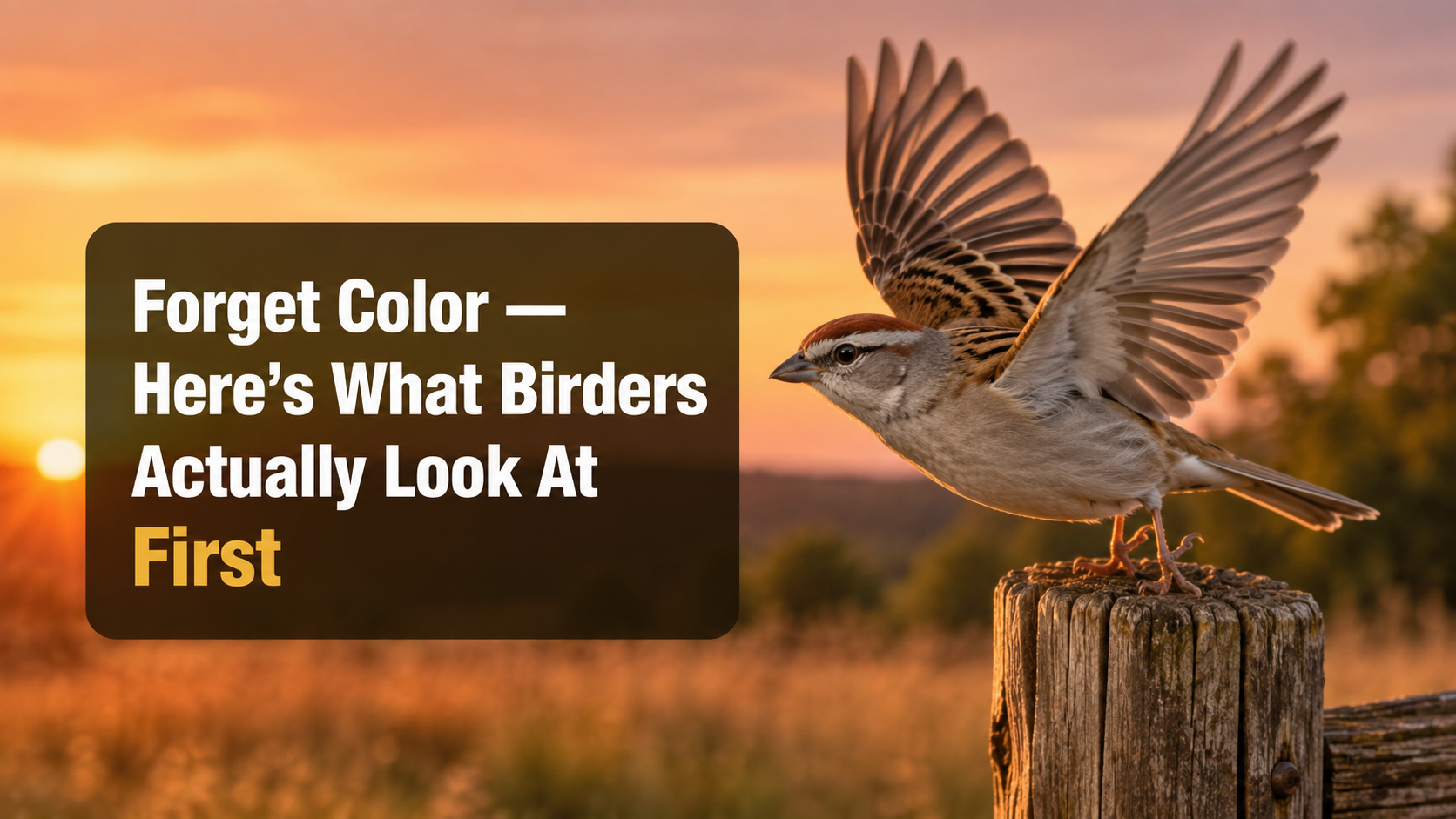
A rusty cap on a small gray-and-white sparrow at your feeder, in summer, is doing most of the work of separating a Chipping Sparrow from a dozen similar birds. Even the thin dark line running back from a bird’s chin — the malar stripe, which separates the cheek from the throat — is sometimes the single mark an entire identification hinges on.
The trick is discipline. Pick the mark that’s actually unusual, not the one that’s just easiest to see. A plain brown back tells you almost nothing. A single bold wing bar, an eye ring, a flash of white in the tail as the bird flies — those are the details worth spending your one allotted glance on.
How Does a Bird’s Behavior Help You Identify It?
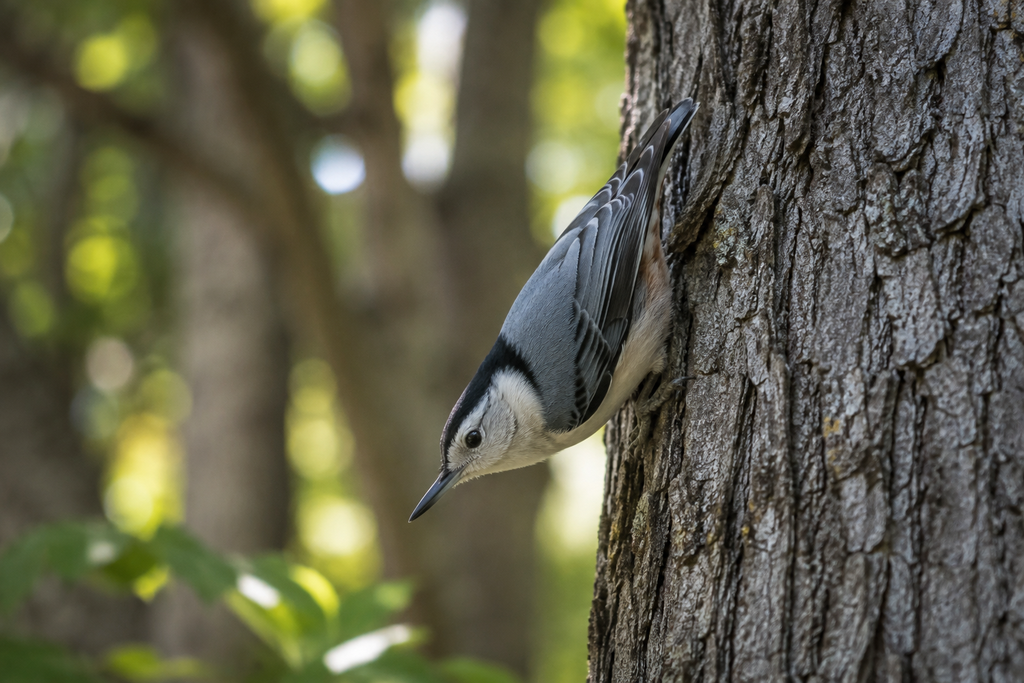
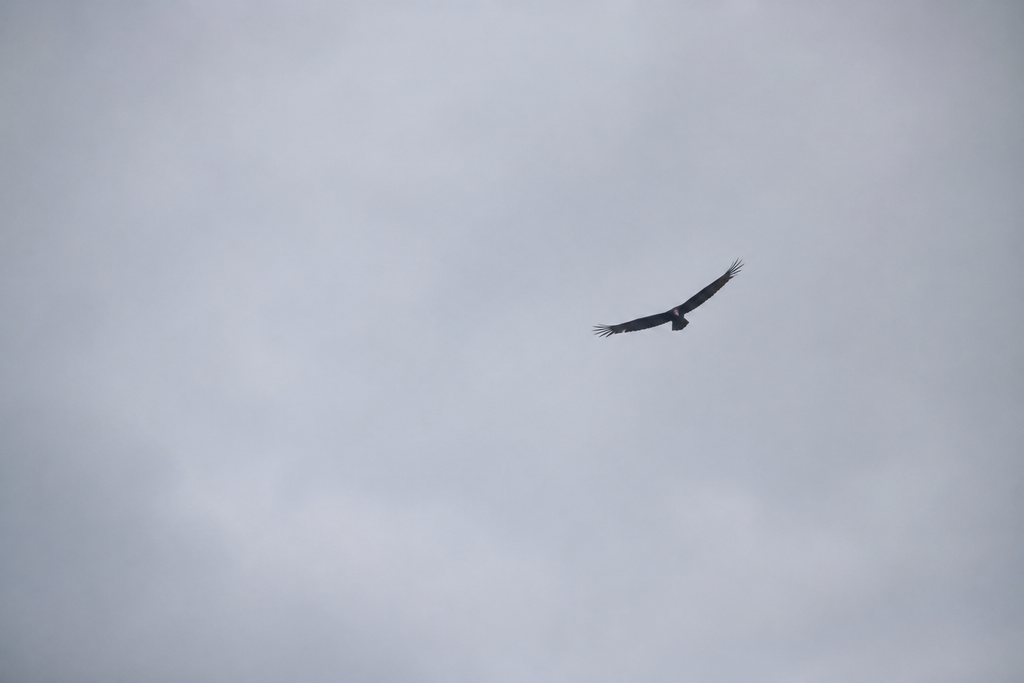
A bird’s movement is often as diagnostic as its markings, and unlike color, it doesn’t fade in poor light. Nuthatches climb down tree trunks headfirst. Goldfinches fly in a bouncing arc while House Finches hold a straighter line on the same route. Eastern Phoebes pump their tails on a perch. A Turkey Vulture soars with its wings raised into a wobbly V, while hawks hold theirs flat and steady.
Shape and one mark will get you most of the way there. Movement closes the gap, and it’s the piece beginners skip because it feels less concrete than a marking you can point to in a book. It shouldn’t be skipped. Behavior is often the most diagnostic thing about a bird, and unlike color, it doesn’t fade in bad light.
A nuthatch comes down a tree trunk headfirst, upside down, in short jerky hops — a habit almost no other backyard bird shares, which makes it identifiable by motion alone even with your back half-turned. A goldfinch flies in a bouncing, roller-coaster arc, closing its wings between each burst of flapping, while a House Finch on the same flight path holds a steadier, straighter line. An Eastern Phoebe perched on a low branch pumps its tail up and down, over and over, a nervous little tic that gives the bird away before you’ve even lifted your binoculars.
Flight style separates whole families of birds at distances where markings are useless. A soaring hawk holds its wings flat and steady. A Turkey Vulture soars with its wings raised into a shallow V — a dihedral — and rocks unsteadily from side to side as it rides a thermal, looking, frankly, like it’s not entirely sure it’s going to stay up. That teetering alone, seen from half a mile off with no color visible at all, is enough to call the bird before it’s close enough for anything else to matter.
Crows and ravens do a version of the same trick. Both are big, black, and loud enough to confuse someone who’s only glanced up once. But a crow flaps in short, steady beats, flap flap flap glide, holding mostly to a straight line, while a raven soars far more, tips and rolls almost playfully on a wind current, and rarely bothers with a crow’s businesslike wingbeat. You can call the difference from a car window doing sixty, long before you’d ever get close enough to compare their fan-shaped and wedge-shaped tails.
How Do Birders Combine Shape, Field Marks, and Behavior?
Experienced birders don’t run these three checks as separate, deliberate steps. They read shape, mark, and movement almost simultaneously, the way someone recognizes a friend’s walk from across a parking lot without consciously analyzing it. Kenn Kaufman’s structure-first approach and Kevin Karlson and Dale Rosselet’s Birding by Impression both build on this same idea: plumage details mean little without the underlying shape and behavior that frame them.
In practice, birders who are fast at this aren’t doing three separate, deliberate steps. They’re running all three almost at once, the way a person recognizes a friend’s walk from across a parking lot without consciously analyzing gait. That instinct is built, not born. Kenn Kaufman, whose Kaufman Field Guide to Advanced Birding is built almost entirely around this idea, argues that memorizing plumage details without understanding a bird’s underlying structure leaves birders unable to actually use what they’ve memorized. Structure comes first because it’s what everything else gets hung on.
Kevin Karlson and Dale Rosselet made a similar case more formally in their book Birding by Impression, which turns the loose, intuitive GISS approach into something closer to a deliberate method — sizing up structural features and behavior side by side with a bird’s actual plumage, rather than treating field marks as the whole story. Their point isn’t that markings don’t matter. It’s that markings mean very little without the shape and behavior that frame them.
That’s the real order of operations, then: shape narrows the field, one mark confirms or eliminates the remaining candidates, and movement is often the tiebreaker when the first two still leave you with two or three possibilities. Thirty seconds is plenty of time to run all three, once you’ve trained yourself not to freeze up staring at a field guide’s color plates instead of the actual bird in front of you.
Go back to that fence-post bird from the first paragraph. Robin-sized, gray-brown, gone in four seconds — that’s shape and rough color, and it’s genuinely not much to work with. But if you’d caught even one more detail in that glance, a tail pumping up and down, a flash of white at the tail’s edge, a bouncing exit instead of a straight one, you’d have had your answer before the coffee finished pouring.
The bird wasn’t hiding anything. There just wasn’t time to notice more than a fraction of what it was showing you, which is exactly why the order of the checks matters more than how many of them you manage to complete.
When You Still Can’t Get There
Not every bird resolves in thirty seconds, even for experienced birders. Dull fall warblers, sparrows that flush from a hedge, and gulls regularly defeat the method entirely. That’s not a failure of the three-check system. Some birds simply don’t offer enough information in the time available, and logging a sighting as probably-this-species instead of a confirmed one is a normal, accepted outcome in the field.
Some birds won’t resolve in thirty seconds no matter how well you run the sequence. Fall warblers in dull plumage, sparrows in a hedge that flush and vanish, gulls — always the gulls — that seem designed specifically to humiliate anyone who claims to have this figured out. Even birders with decades in the field let some sightings go as “probably X” or just write down the family and move on with their morning.
That’s not a failure of the method. It’s just what birds do. They’re not obligated to make this easy, and the ones that get away are usually the reason you keep looking up in the first place.