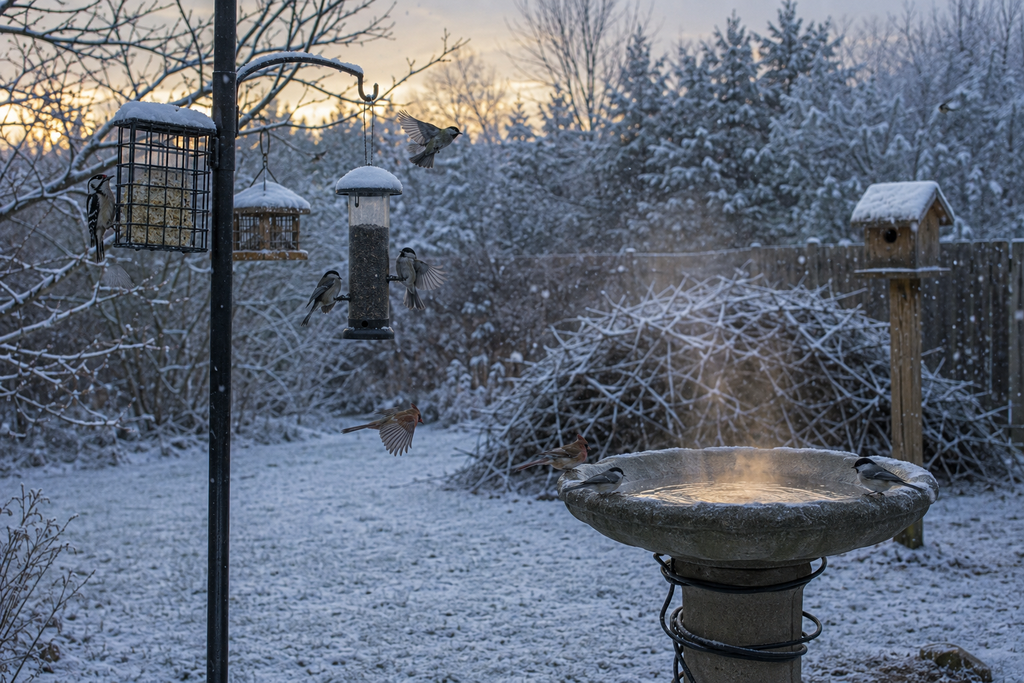
Right now, put out rendered suet, shelled peanuts, and unfrozen water for backyard birds — those three things matter more than any bag of mixed seed once the weather turns cold. A heated bird bath will pull in more birds than a full feeder ever will. That’s not where most people start. Most people reach for seed first, because seed is what’s stacked at the front of the store in the big bag with a cardinal printed on it. But seed is only part of the story, and it’s the smaller part.
That’s not where most people start. Most people reach for seed first, because seed is what’s stacked at the front of the store in the big bag with a cardinal printed on it. But seed is only part of the story, and it’s the smaller part.
Go outside on a cold morning in late October or November and actually watch what the birds are doing. They’re not lounging at the feeder, picking through a mix at their leisure. They’re working — grab a seed, crack it, swallow, grab another, over and over, fast.
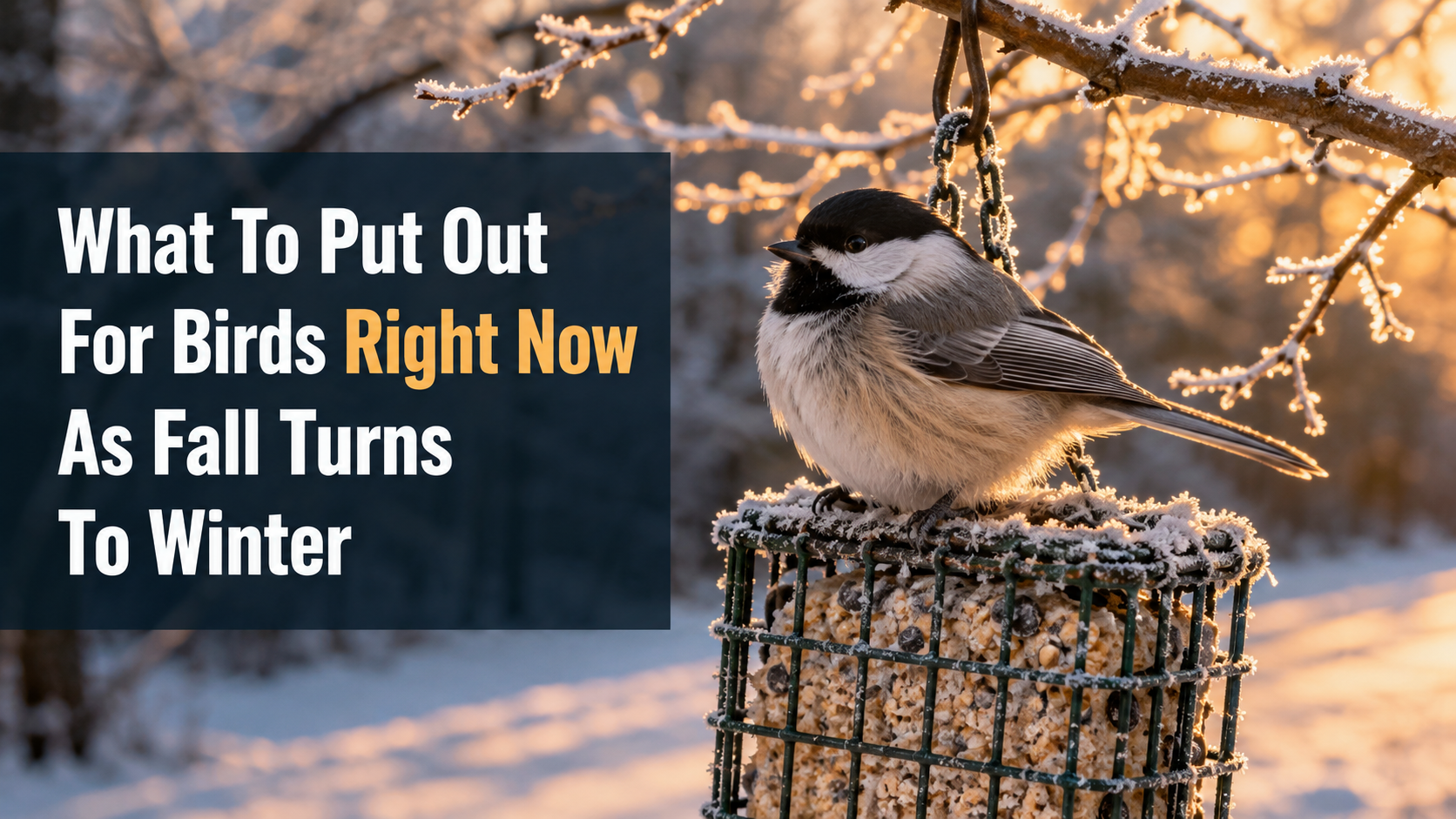
A chickadee weighs about as much as two nickels. It has to eat almost constantly through the daylight hours just to survive the night that’s coming. That’s the thing worth sitting with before you buy anything: this isn’t really about pulling more birds into view. It’s about giving the ones already using your yard enough fuel to make it to morning.
What Foods Should You Put Out for Birds Right Now?
Put out rendered suet, shelled peanuts, and black oil sunflower seed as the base of a fall and winter feeding station, since these give birds the most fat and calories per bite. Add nyjer seed for finches and scatter white proso millet under shrubs for ground-feeding sparrows and juncos. Suet and peanuts matter most: birds burn through fat reserves overnight, and these two foods rebuild them fastest.
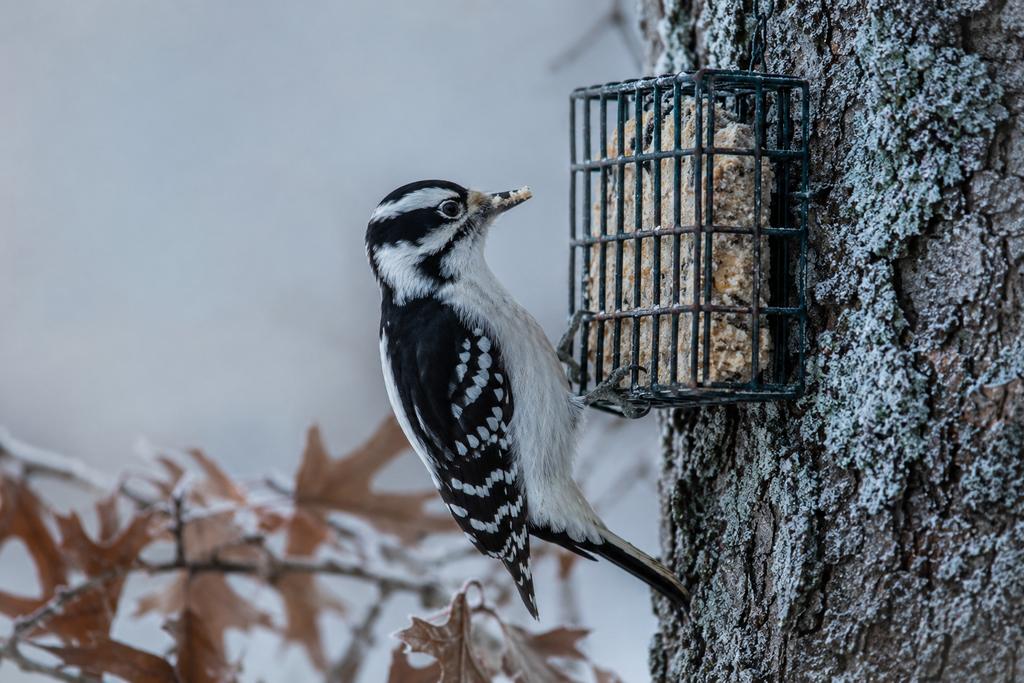
Suet is the one thing you shouldn’t skip. Switch out any of the soft “no-melt” summer dough for a real rendered suet cake now that temperatures are dropping — the classic kind holds more fat, and fat is exactly what a bird burns to stay warm overnight. Look for cakes blended with peanuts or dried fruit if you want to pull in a wider mix of woodpeckers, nuthatches, and titmice.
Hang it in a cage feeder or a tail-prop style that mimics bark, and don’t be surprised if a yellow-rumped warbler shows up at it — most warblers ignore feeders entirely, but that species has a well-known taste for suet in cold weather.
Peanuts are the other workhorse. Whole peanuts in the shell go fast with jays and woodpeckers; shelled and chopped peanuts are safer for chickadees and nuthatches, which can choke on big pieces.
Peanut butter works too — Emma Greig, who runs Project FeederWatch at the Cornell Lab of Ornithology, has pointed out that it’s an easy source of the same fat, whether you smear it into bark or blend it with suet. Skip bacon grease, though, however tempting that seems. The high heat used to fry bacon produces compounds that build up in birds over time in a way plain rendered fat doesn’t.
Nyjer seed earns its keep with finches — goldfinches, redpolls, siskins, sometimes crossbills if you’re far enough north. It’s tiny and oily, which is exactly why they want it, and it needs a mesh sock or feeder built for a seed that small.
Black oil sunflower stays the reliable base layer for almost everyone else. And if you’ve got ground-feeding birds moving through — juncos, native sparrows migrating south for the winter — scatter some white proso millet under a shrub rather than out in the open. It’s a cheap addition that does real work for exactly the birds who won’t come to a hanging feeder at all.
None of this is really optional once the weather turns. Chickadees and finches can pack on close to ten percent of their body weight in fat just from berries and insects in the fall, building reserves for the season ahead — and a feeder stocked with the right things is what lets them keep adding to that after the natural food thins out.
Why Does Water Matter More Than Food Right Now?
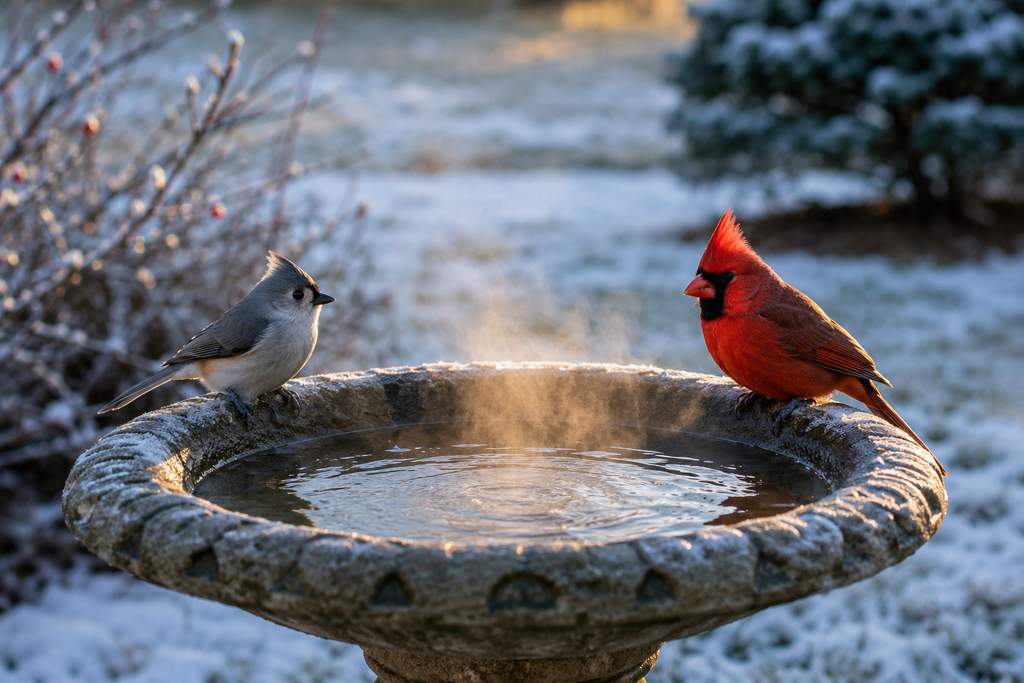
Water matters because natural sources freeze first, cutting off drinking and bathing right when birds need both most. Clean, well-arranged feathers trap warm air against a bird’s skin, and even a small heated bird bath or de-icer, kept shallow and free of salt or antifreeze, keeps that insulation working through the coldest stretches of winter.
Here’s the part people skip: water. Ponds freeze, puddles freeze, the birdbath you filled in July ices over by November, and suddenly the easiest source of open water within a mile is gone. Birds can eat snow in a pinch, but melting snow inside their own bodies costs them energy they don’t have to spare in December.
Water isn’t just for drinking, either. Birds need to bathe even when it’s fifteen degrees out, because clean, well-arranged feathers are what trap warm air against their skin. A chickadee with properly maintained plumage can hold something like a twenty-one-degree Celsius layer of insulation between its skin and the outside air — which is a fairly wild number when you think about how small the bird actually is. Let those feathers get dirty or matted and that insulation stops working the way it’s supposed to.
A heated bath or a simple de-icer dropped into an existing one solves most of this. Keep the water shallow, an inch or two, so smaller birds aren’t at risk, and skip anything that promises a heated bath will “boil” — it only needs to stay just above freezing.
No salt, no antifreeze, ever, no matter what a forum somewhere suggests. If you don’t want to buy a heater, pouring a kettle of hot water over the ice each morning works fine; it just means you’re doing it by hand instead of letting a thermostat handle it.
Do Backyard Birds Need Shelter in Winter Too?
Yes — birds need shelter from wind and cold as much as they need food and water. Roost boxes, brush piles, and dense evergreen cover let birds trap body heat and hide from predators overnight. Leaving seed heads standing and skipping a full fall cleanup gives birds free food and cover without costing you anything extra.
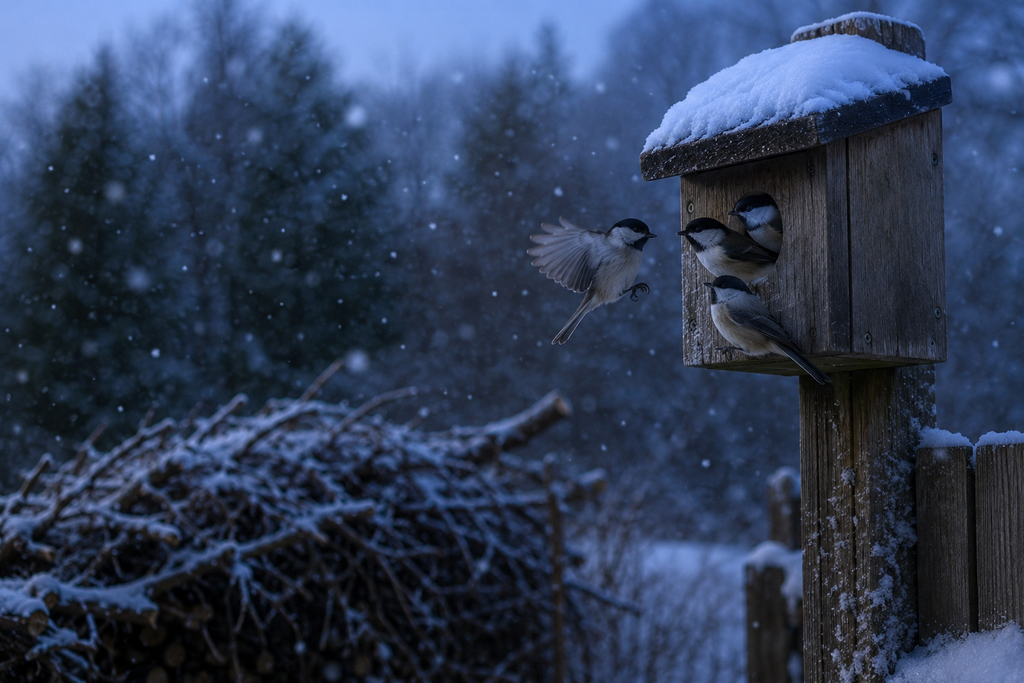
Food and water get most of the attention, but birds also need somewhere to get out of the wind. A roost box does this on purpose — it’s built shallow and enclosed to trap body heat, and on the coldest nights you’ll sometimes find a dozen chickadees or bluebirds crammed into one box together, sharing warmth the way huskies pile up in a snowbank.
You don’t need to buy one, though. A brush pile in the corner of the yard, a dense stand of evergreens, even a hedge you haven’t gotten around to trimming — all of it works as a windbreak and a hiding spot from hawks.
This is also the argument for skipping the tidy fall cleanup, or at least going easy on it. Leaving seed heads standing and leaf litter where it falls isn’t laziness — it’s food and cover, doing exactly what a feeder does, just for free and without you having to refill anything.
Should You Take Down the Hummingbird Feeder Yet?
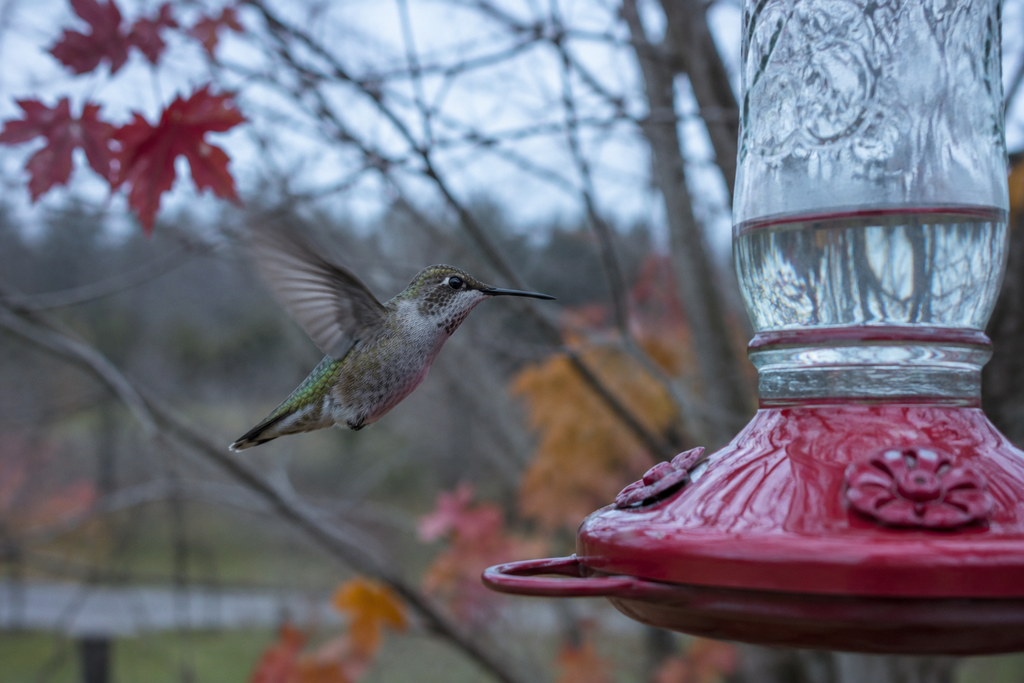
No — leave the hummingbird feeder up. Migration is triggered by shortening daylight and hormonal changes, not by food availability, so a full feeder never delays departure. Keep it filled for about two weeks after your last sighting to fuel late juvenile migrants passing through, and in the Deep South, some feeders stay up year-round for wintering species.
If you’re still running a hummingbird feeder, don’t feel like you’re doing something wrong. The idea that a full feeder tricks hummingbirds into skipping migration is one of the most persistent myths in backyard birding, and it isn’t true. Migration timing is set by day length and hormones, not by whether there’s sugar water available — a bird that’s leaving on a given day leaves that day whether your feeder is up or empty.
What a late feeder actually does is fuel stragglers. Juvenile hummingbirds making their first migration south often pass through weeks after the adults, with no experience finding food along the route, and a feeder that’s already been taken down is a stop that simply doesn’t exist for them. The general rule holds up well: keep it filled for about two weeks after you see your last hummingbird of the season, and in the Deep South, where wintering Rufous and other stray species show up, some people leave a feeder up all year without issue.
The Yard Does More Work Than You Think
A backyard that gets birds through winter needs three things: high-fat food like suet and peanuts, unfrozen water from a heated bath or de-icer, and shelter such as brush piles or roost boxes. None of it requires much — just consistency through the coldest months, from November through the end of April.
There’s something almost embarrassingly simple about all of this. Fat, water, a place to hide from the wind — that’s most of what gets a bird through a hard winter, and none of it requires much beyond attention. Project FeederWatch opens its season on November 1st every year, and it’s a decent excuse to actually notice what’s using your yard once the leaves are down and the view opens up.
I think about it like this sometimes: somewhere out there tonight, a chickadee that weighs less than a stick of gum is going to survive because it found a suet cake, or a bath that wasn’t frozen, or a hedge that broke the wind just enough. You won’t see most of that happen. You’ll just notice, one gray morning in February, that it’s still there.