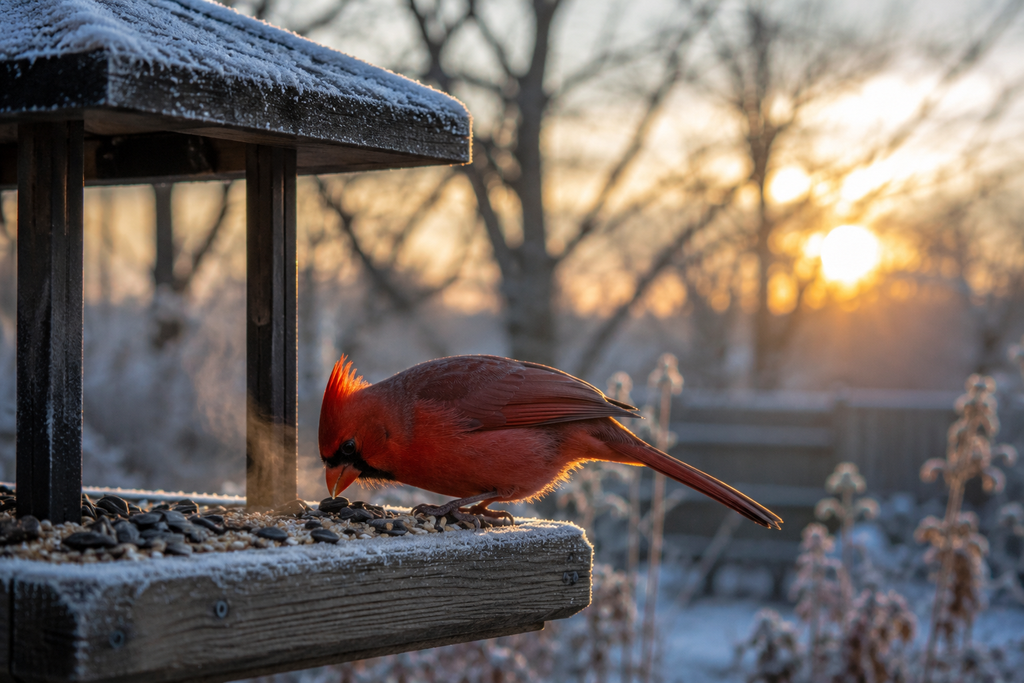
Cardinals are pickier eaters than most backyard birds get credit for — they’re passing over your feeder because it’s built for finches and chickadees, not for a bird with a beak like a nutcracker and a deep distrust of open space.
You’ve done everything the internet told you to do. Bought the feeder, filled it with a “wild bird” blend from the hardware store, hung it where you can see it from the kitchen window. Chickadees show up first, then a titmouse, then a whole committee of house sparrows arguing over the perch. And the cardinal — the one you actually wanted, the one you can hear singing from the hedge every morning — just doesn’t come.
That’s not bad luck. Cardinals are more selective than almost anything else that visits a backyard feeder, and the mismatch is usually structural: wrong seed, wrong feeder shape, wrong spot in the yard. Fix those three things and most of the mystery disappears.
WHY DO CARDINALS SKIP THE SAME FEEDER CHICKADEES LOVE?
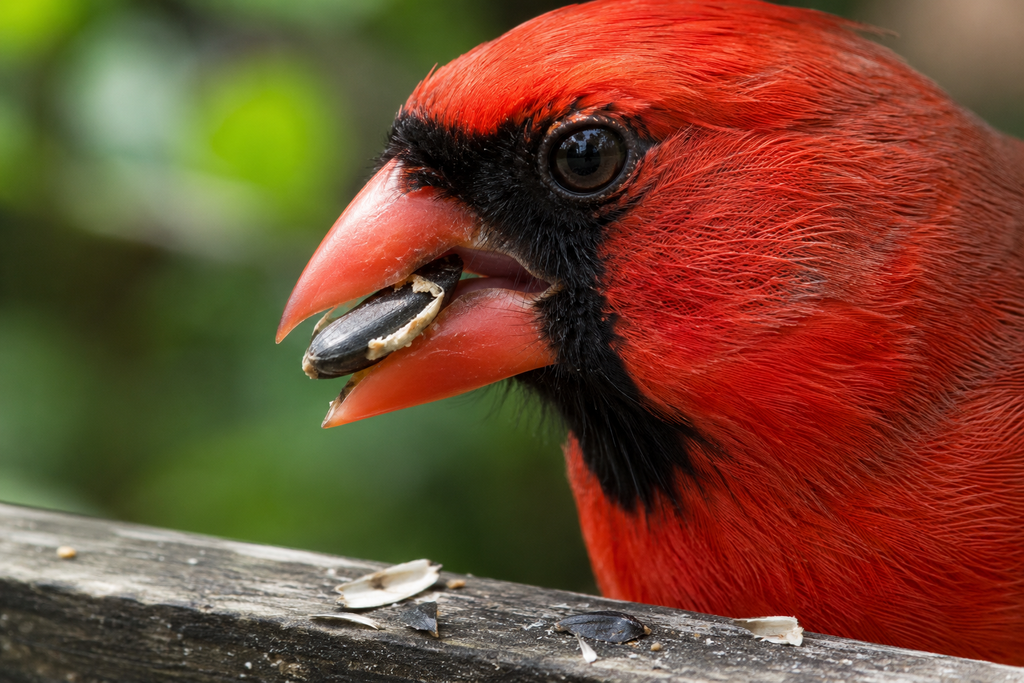
Cardinals skip feeders that chickadees love because most cheap seed mixes are padded with millet, wheat, and cracked corn that cardinals largely ignore. Their thick, conical beak is built to crack large, high-fat seeds — black oil sunflower first, safflower a close second. Nyjer thistle, a finch favorite, holds no appeal. When the seed doesn’t match a cardinal’s beak and calorie math, the bird simply skips the feeder for something more worth the effort.
A lot of the “wild bird” mixes sold at grocery stores are padded out with milo, wheat, and cracked oats — cheap filler that keeps the price down and the bag heavy. Cardinals mostly ignore it. They’ll flick it onto the ground looking for something worth the effort, and so will most of the birds you actually want to see.
White proso millet gets eaten, but mostly scattered on a platform or the ground rather than hulled at a hanging feeder. If your feeder’s been sitting there full of a bargain mix for two months with no cardinal in sight, that’s not stubbornness on the bird’s part. That’s a cardinal doing the math on calories versus effort and deciding your feeder isn’t worth the trip.
WHAT KIND OF FEEDER ACTUALLY GETS A CARDINAL TO LAND?
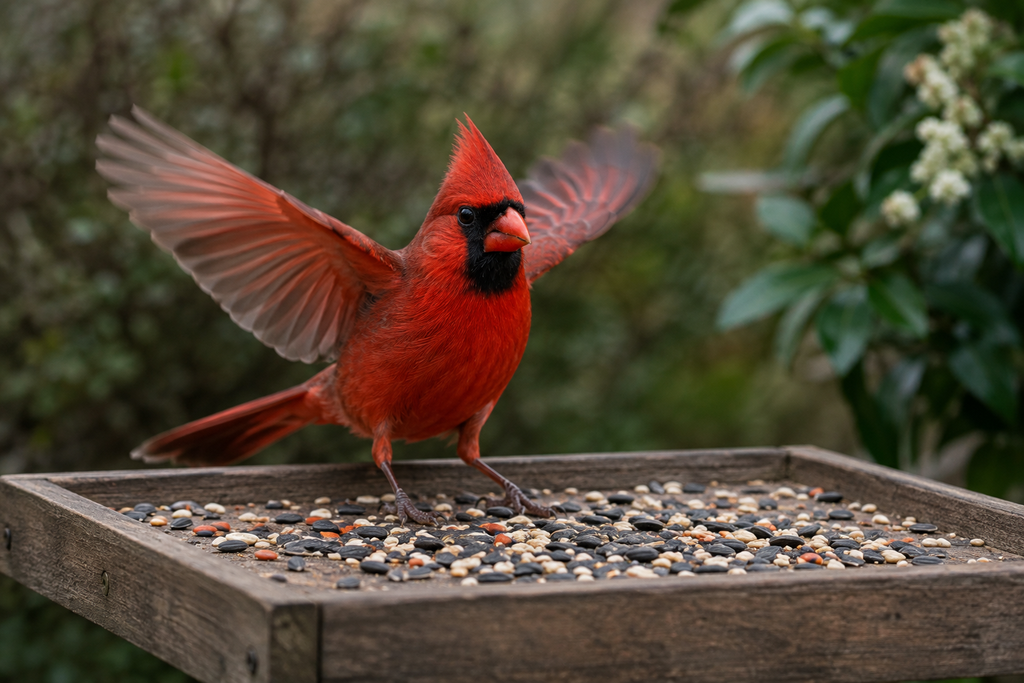
Cardinals need a flat, stable landing spot, not a narrow tube perch built for finches. Platform feeders and hopper feeders with a wide tray work best, since cardinals are larger birds that land with both feet and a long tail trailing behind them. Perches should be roughly an inch and a half wide — most stock dowels are too thin. Ground trays or scattered seed near shrubs work too, since cardinals forage on the ground as readily as they perch.
Most tube feeders — the kind with tiny perches ringing a plastic cylinder — were designed with finches in mind. A cardinal will try to work one occasionally, but it’s an awkward fit, like asking someone in snowshoes to climb a ladder. Given the choice, they’ll skip it and go somewhere easier.
Platform feeders and hopper feeders with a wide lip or tray solve the problem, letting a cardinal land with both feet planted and its tail hanging free. There’s a simpler option too, and it costs nothing: the ground. Cardinals forage there as readily as they perch, often alongside juncos and mourning doves, scratching through leaf litter the way a lot of people never think to look.
WHY DOES WHERE YOU PUT THE FEEDER MATTER AS MUCH AS WHAT’S IN IT?
Cardinals stay alert for predators while feeding, so placement affects visits as much as seed choice. A feeder ten to fifteen feet from dense shrubs or low trees gives cardinals a quick escape route from hawks, without sitting so close that a cat can ambush it directly. Mounting the feeder four to five feet high keeps it above easy pouncing range while still allowing an easy final approach for a landing bird.
Cardinals are jumpy — not nervous in a comic way, but genuinely watching for the hawk or the outdoor cat that could end them mid-meal. A feeder stuck in the dead center of an open lawn, with nothing but grass in every direction, asks a cardinal to feed somewhere it can’t hide if something comes at it from above. Most will pass.
What they want is quick reach of real cover — a shrub, a low tree, a tangle of brush — so a few wingbeats gets them to safety if a hawk drops in. Height matters too: four to five feet off the ground keeps a feeder above easy pouncing range for most cats, while still letting a cardinal drop in without a long, exposed approach.
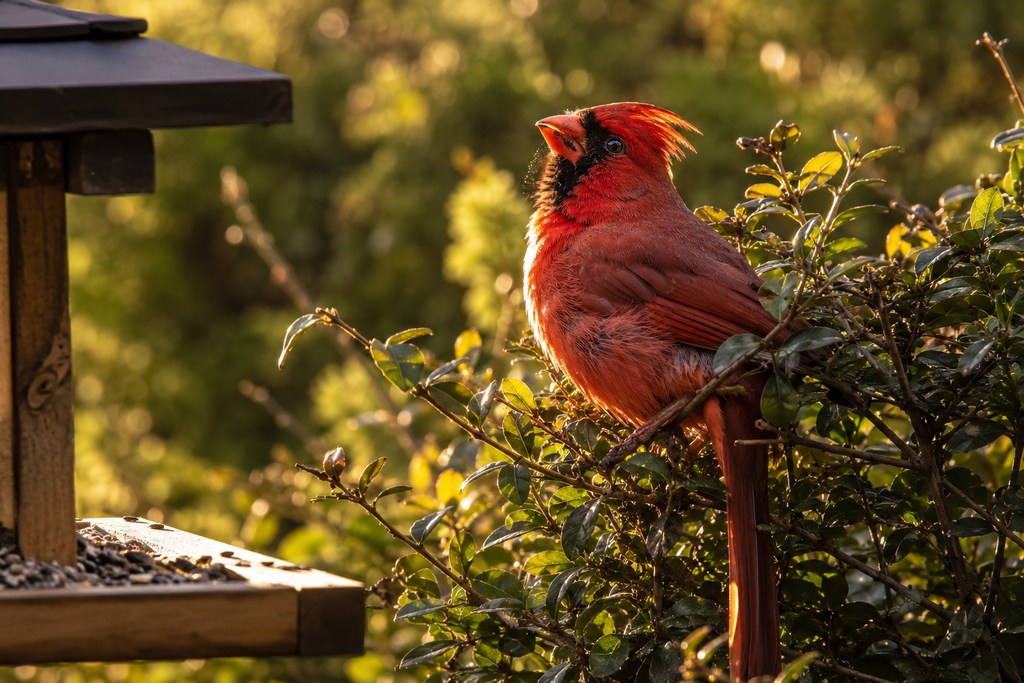
THE PART MOST PEOPLE GIVE UP ON TOO SOON
Cardinals don’t migrate, so a new feeder has to be discovered, tested, and trusted by a resident bird or pair before it becomes routine — often taking anywhere from a few days to a few weeks. Feeding consistently, in the same spot, on the same schedule, speeds that up. Cardinals feed most actively at dawn and in the hour before dusk, so those windows are the best times to watch for the first visit.
I used to think the cardinals in my own yard were avoiding me on purpose, some kind of grudge against my choice of feeder. Turned out I’d hung a tube feeder full of millet twenty feet from the nearest hedge and called it a day.
Swapped it for a platform with sunflower and safflower, moved it twelve feet from the lilac. It took eleven days. Now there’s a male sitting on the fence most mornings, waiting for me to fill it, like he’s the one keeping me on schedule.