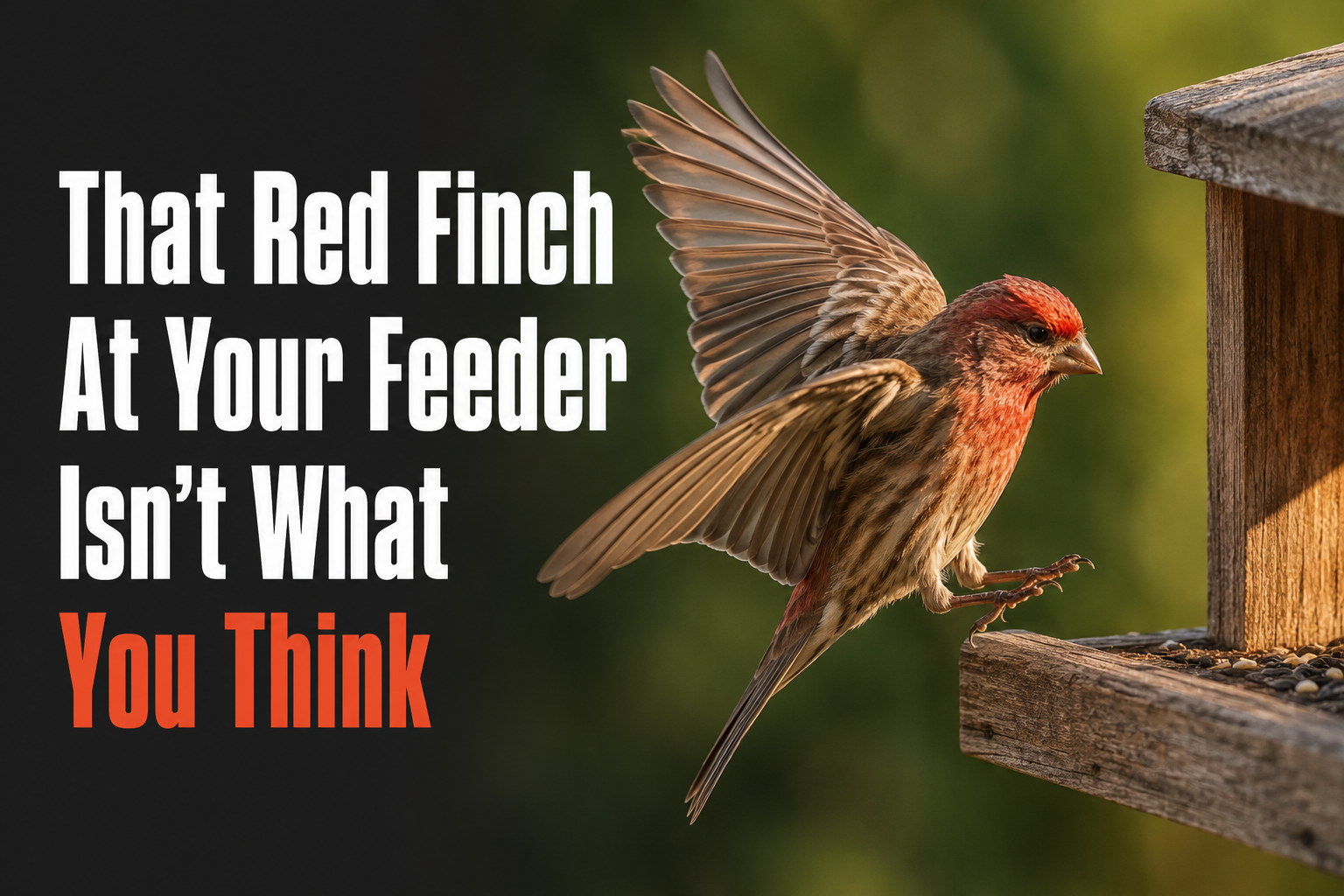
The red finch mobbing your bird feeder is almost certainly a House Finch, not a Purple Finch. House Finches show red concentrated on the eyebrow and throat with a streaky brown back, while true Purple Finches carry raspberry color across the whole head and back and only show up as irregular winter visitors. House Finches are also a relatively recent eastern arrival, descended from a 1940 pet-trade release on Long Island.
Look at your feeder right now. That flash of red mobbing the sunflower seed, driving off the chickadees — you called it something. A cardinal, maybe, if you weren’t looking closely. Or, if you’re the type who owns a field guide and isn’t afraid to use it, a purple finch.
It’s probably neither. There’s a very good chance you’re looking at a House Finch, and the reason that mix-up happens so often traces back to a pet-store scandal from before your grandparents were born.
Here’s how to actually sort out what’s eating your birdseed, and why the wrong guess used to matter more than you’d think.
How Do You Tell a House Finch From a Purple Finch?
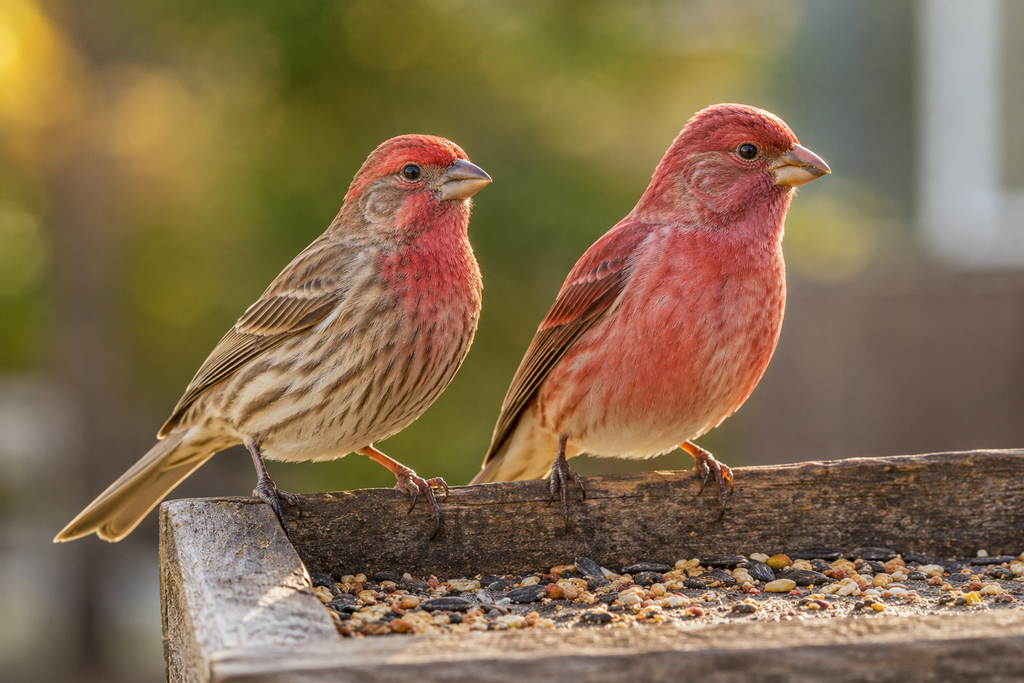
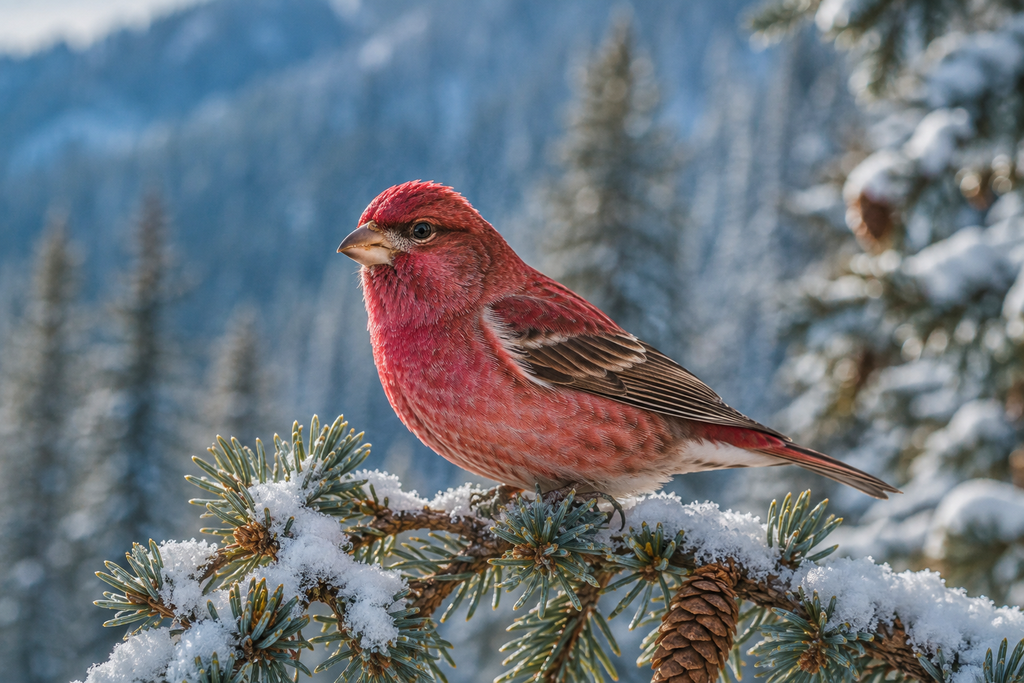
A male House Finch shows red concentrated on the eyebrow, throat, and breast, with a streaky brown back and thick brown stripes down the flanks. A male Purple Finch carries raspberry-red color across its head, breast, and back all at once, with a rounder body, shorter notched tail, and thicker bill. Females of both species are brown and streaked, but female Purple Finches show a bolder white eyebrow and a darker throat stripe.
Start with the ornithologist Roger Tory Peterson, who once summed up the Purple Finch as a sparrow dipped in raspberry juice. It’s a good line, and it’s also the reason so many backyard birders reach for “purple finch” the second they see red plumage. The trouble is that the bird actually showing up at feeders across most of the country isn’t purple at all.
On a male House Finch, the red sits mostly on the eyebrow, the throat, and the upper breast, fading into a streaky brown back and a belly marked with thick, ragged brown stripes. The bill curves a little, like someone pinched it into shape.
A male Purple Finch wears its color differently. The raspberry tone washes across the head, breast, and back all at once, with no sharp break into brown. Its body reads rounder, its tail shorter and more deeply notched, its bill thicker and blunter.
Females are where things get genuinely hard. Both are streaky and brown, though the female Purple Finch tends to show a bolder white eyebrow stripe and a darker line down the side of her throat. Side by side, the difference is obvious. Alone at a feeder, thirty feet away, through a kitchen window? Not so much.
Why Are House Finches So Common in the Eastern US?
House Finches are native to the western United States, but pet dealers illegally trapped roughly 100,000 of them in California during the late 1930s and sold them in New York as “Hollywood Finches.” When federal investigators closed in during 1940, dealers released their remaining stock on Long Island. That small founder population spread across the East over the following decades, reaching Pennsylvania by the 1960s and the Great Plains by 1990.
The House Finch wasn’t always an eastern bird. For most of its history it belonged to California and the rest of the American West, and if you lived in New York or Ohio or Georgia before 1940, you’d never have seen one. Then came the Hollywood Finch.
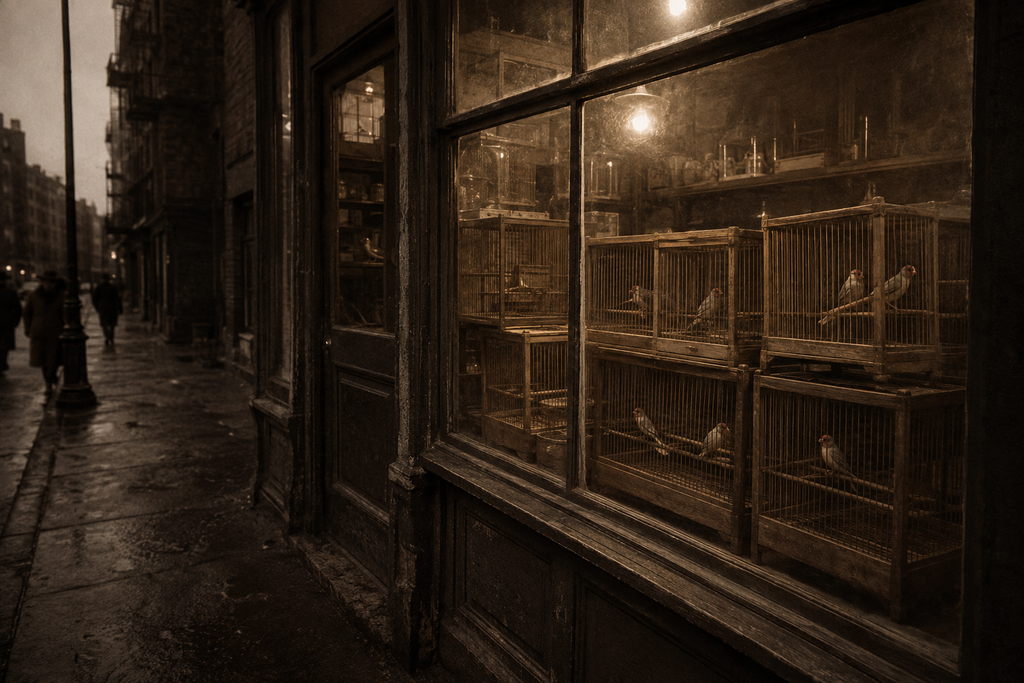
Pet dealers in the late 1930s were trapping House Finches by the tens of thousands in California, shipping them east, and selling them in New York City pet shops under that name — a cage bird with a pretty song and rosy-red plumage.
Problem was, House Finches are a native migratory species, and trapping or selling them was flatly illegal under the Migratory Bird Treaty Act. The National Audubon Society caught wind of it and ran a sting operation with fake buyers, helping uncover roughly 100,000 illegally trapped birds moving through the trade.
When word got out that federal agents were closing in, panicked shop owners in 1940 did the simplest thing they could think of. They opened the cages.
A small founder population on Long Island took hold, and it did not stay small. By the 1960s House Finches had reached Pennsylvania. By the 1970s, Chicago. By 1990, they’d pushed into Missouri, Iowa, and eastern Kansas, eventually meeting up with their native western relatives and merging into one continuous population across almost the entire country. Every House Finch you see today east of the Rockies is, in a very real sense, descended from a jailbreak.
Why Do You Rarely See an Actual Purple Finch?
Purple Finches are irruptive migrants, meaning their winter movements depend on the conifer cone crop rather than a fixed schedule. In years when spruce and fir trees to the north produce well, they may stay in the boreal forest all winter. In leaner years, they push south into backyards across the central and southeastern United States, then disappear again for a season or more.
So where’s the real thing? Purple Finches do exist, and in parts of the country you can absolutely find them at a feeder — just not reliably, and not every year. They’re what ornithologists call irruptive migrants: birds whose winter movements track the cone crop on conifers rather than the calendar.
In a year when spruce and fir trees to the north produce heavily, Purple Finches may barely leave the boreal forest. In a lean year, they push south into backyards across the central and southeastern U.S. in numbers, then vanish again for a season or two.
That unpredictability is part of why the confusion persists. House Finches are always there, year-round, in nearly every neighborhood, gregarious and loud about it. Purple Finches show up like weather, welcome and a little rare, favoring the tops of conifers and the edges of mixed forest over the average suburban hedge.
If you’ve never knowingly seen one, that’s not a failure of attention. Some years, they simply aren’t within a thousand miles of your feeder.
Why Does Getting the House Finch ID Right Actually Matter?
Eastern House Finches descend from a small 1940 founder population, giving them unusually low genetic diversity. That bottleneck is part of why House Finch conjunctivitis, a bacterial eye disease first documented in the mid-1990s, spread so severely through feeder flocks. Accurate reporting also matters for citizen science databases like eBird and Project FeederWatch, which rely on backyard observers correctly identifying which finch is actually at the feeder.
Misnaming a finch feels like a harmless slip, and most of the time it is. But there’s a reason birders care more than seems reasonable about getting House Finch versus Purple Finch right, and it goes back to that same 1940 founder population.
Because eastern House Finches all descend from such a small starting group, they carry unusually low genetic diversity for such a widespread bird. In the mid-1990s, a bacterial eye infection called Mycoplasma gallisepticum — House Finch conjunctivitis, in plain terms — tore through that population, causing crusted, swollen eyes that can leave a bird unable to find food or spot a predator.
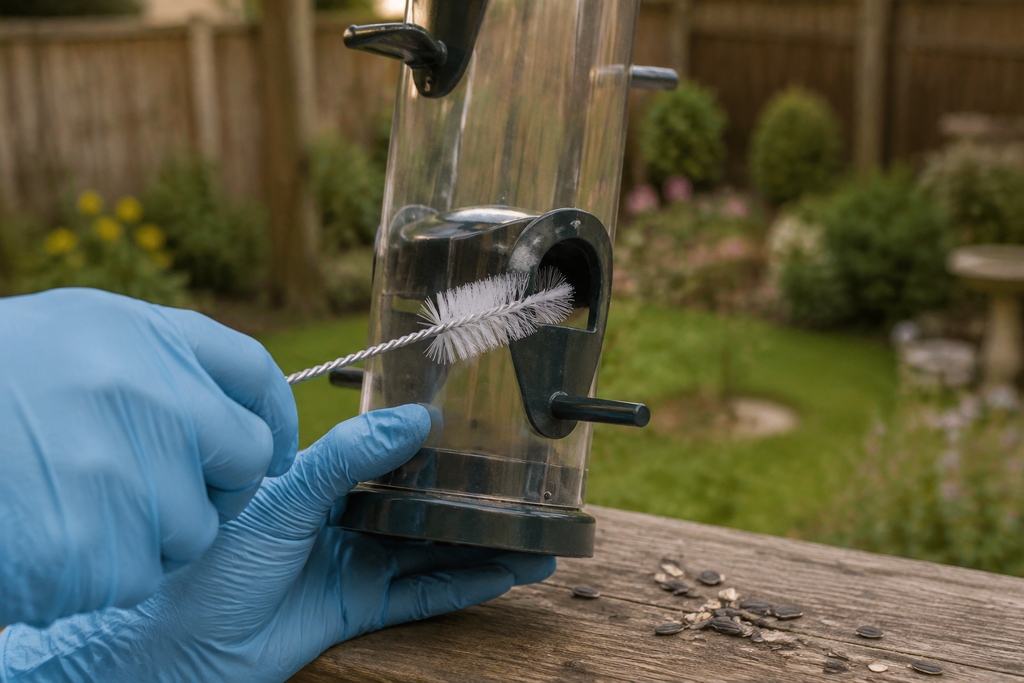
Researchers partly credit the disease’s fast, severe spread to that thin genetic bottleneck, and it’s the reason feeder hygiene advice exists at all. A shared perch or seed tray is exactly how a contagious eye disease moves through a flock. Regularly cleaning feeders and birdbaths with a diluted bleach solution, and pulling feeders down for a couple of weeks if you spot a sick bird, actually does something.
There’s a second reason accuracy matters, a quieter one. Citizen science projects like eBird and Project FeederWatch run on exactly the kind of report you’d submit after a morning at your window, and a consistent, small error nudges the map. Getting it right isn’t pedantry. It’s just paying attention to the bird that’s actually there.