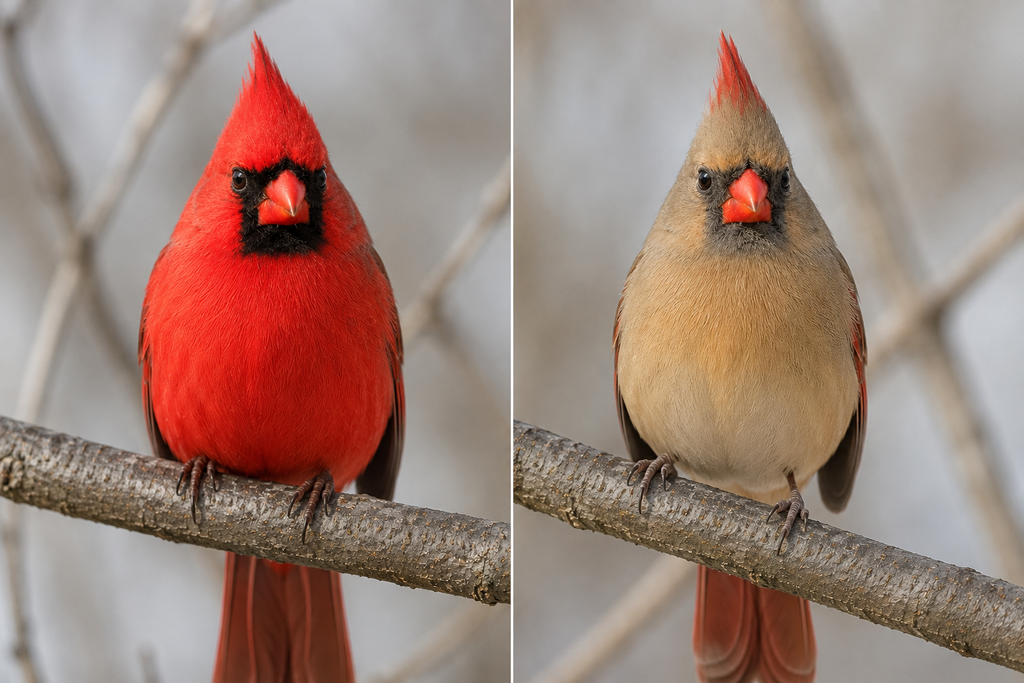
Male and female Northern Cardinals look different because of diet, hormones, and genetics working together. Males convert dietary carotenoids into vivid red plumage through a gene called CYP2J19, a process that appears to be regulated by testosterone. Females carry the same gene but express it far less, producing muted brown plumage with red accents that camouflages them while they incubate eggs for up to two weeks at a stretch.
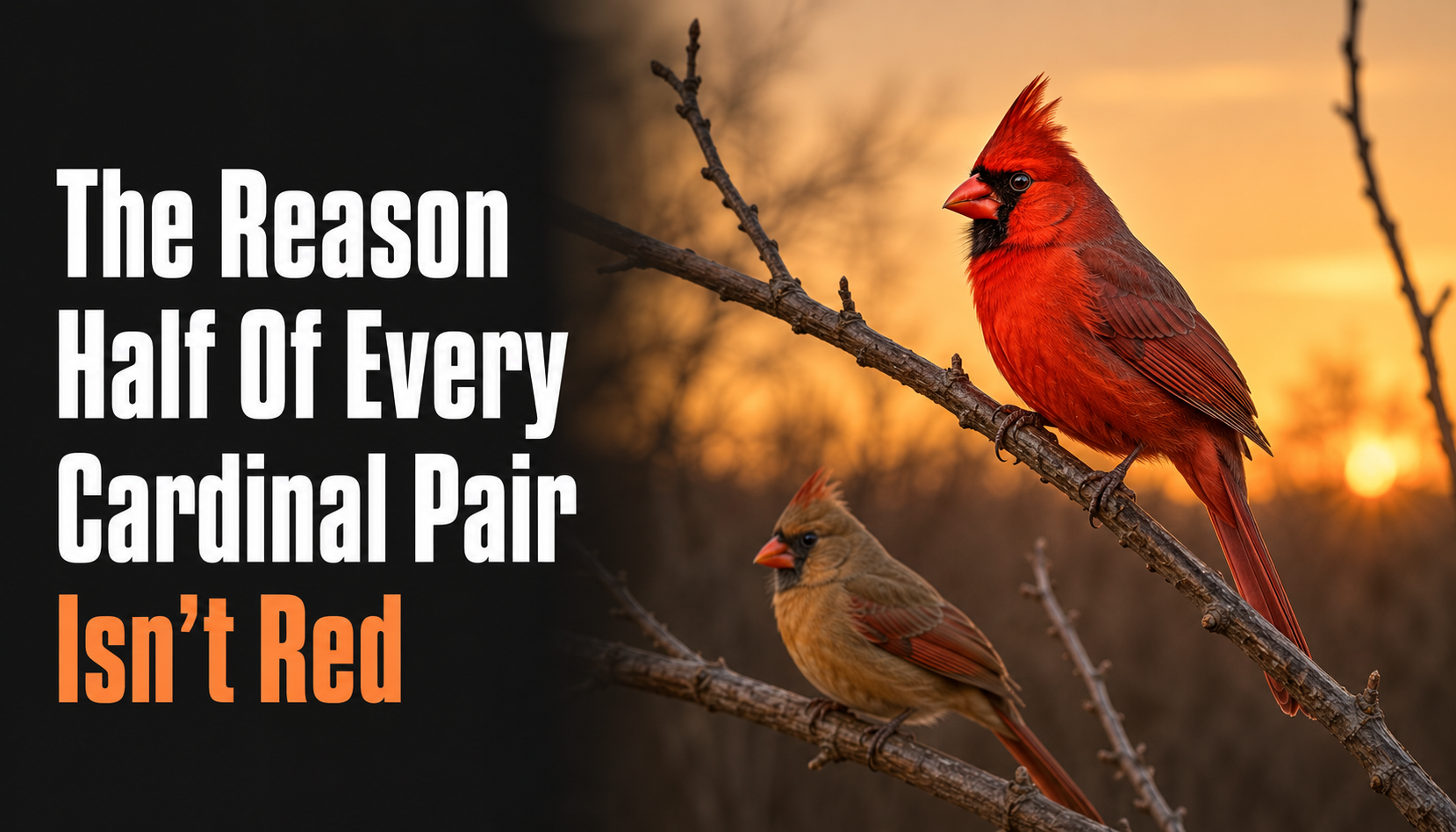
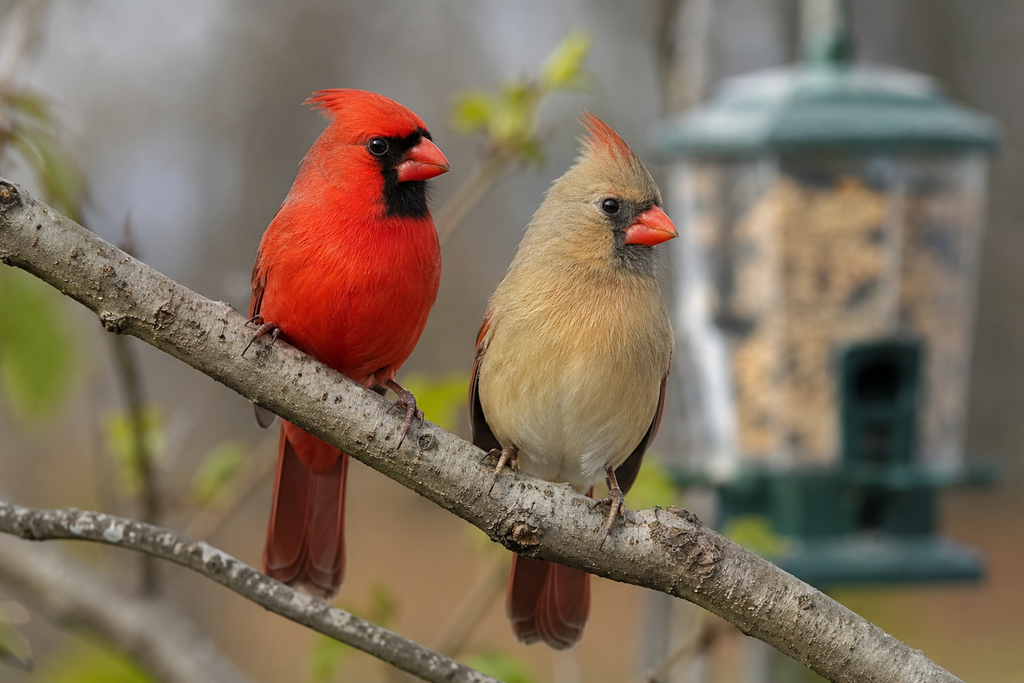
You’ve probably had this moment. A cardinal lands on the fence, red as a stop sign, and you feel that little jolt of recognition — oh, a cardinal. Then a second bird drops down beside it, tawny brown with just a smudge of red on the wingtips, and something in your brain stalls out. That’s… also a cardinal?
It is. She’s the same species, sitting six inches from her mate, looking like she belongs to a different bird family entirely. Northern cardinals are one of the clearest examples of what biologists call sexual dimorphism — visible, no-squinting-required differences between males and females of the same species. But “the male is red and the female isn’t” undersells what’s actually going on. There’s a real story wired into that color gap, and it runs through diet, genetics, camouflage, and one genuinely strange biological accident.
Why Is the Male Cardinal So Relentlessly Red?
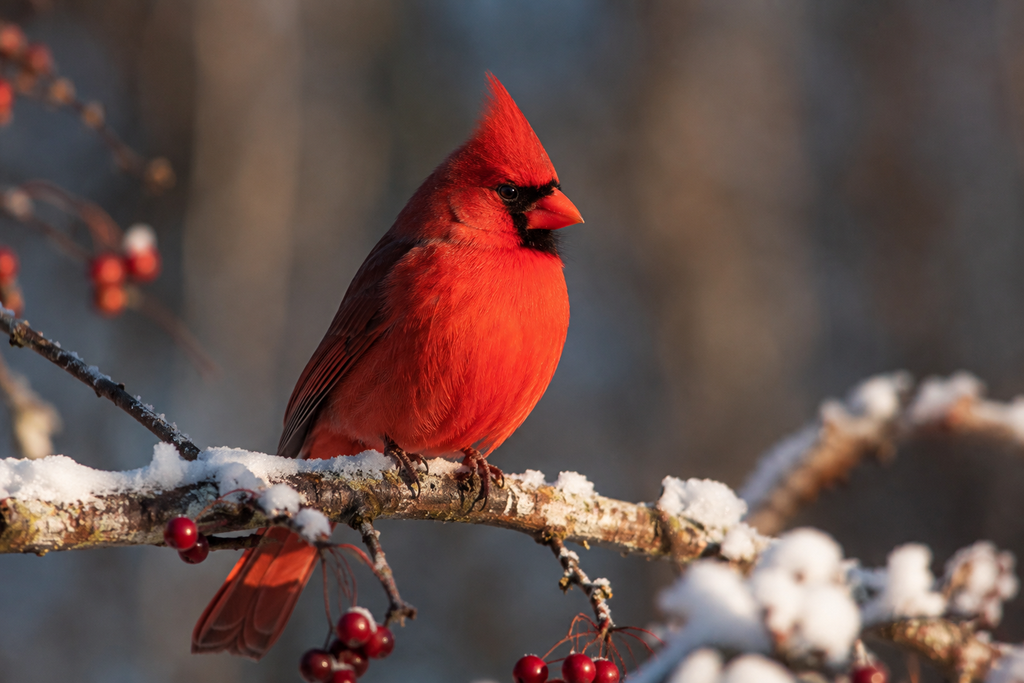
Male cardinals get their red from carotenoid pigments in their diet, converted into deeper red ketocarotenoids by a gene called CYP2J19. This conversion appears to be regulated by testosterone, so brightness reflects both foraging skill and hormonal condition. Because the color can’t be faked, female cardinals use it as an honest signal — brighter, redder males tend to get chosen as mates more often than dull or patchy ones.
Male cardinals don’t hatch red. They build it, feather by feather, out of what they eat. Birds can’t manufacture carotenoids on their own, so a male has to pull them from berries, seeds, and other reddish foods in his diet. A washed-out or patchy male usually isn’t unlucky — he’s underfed, or not hormonally primed to make full use of what he’s eating.
Researchers at Harvard’s Museum of Comparative Zoology sequenced the northern cardinal genome in 2020 and found regulatory regions near CYP2J19 that appear to respond to hormone signals. That lines up with what field biologists had already suspected: testosterone likely controls how much of that red gets switched on. Females read the result without needing a biology degree.
So Why Doesn’t the Female Get the Same Deal?
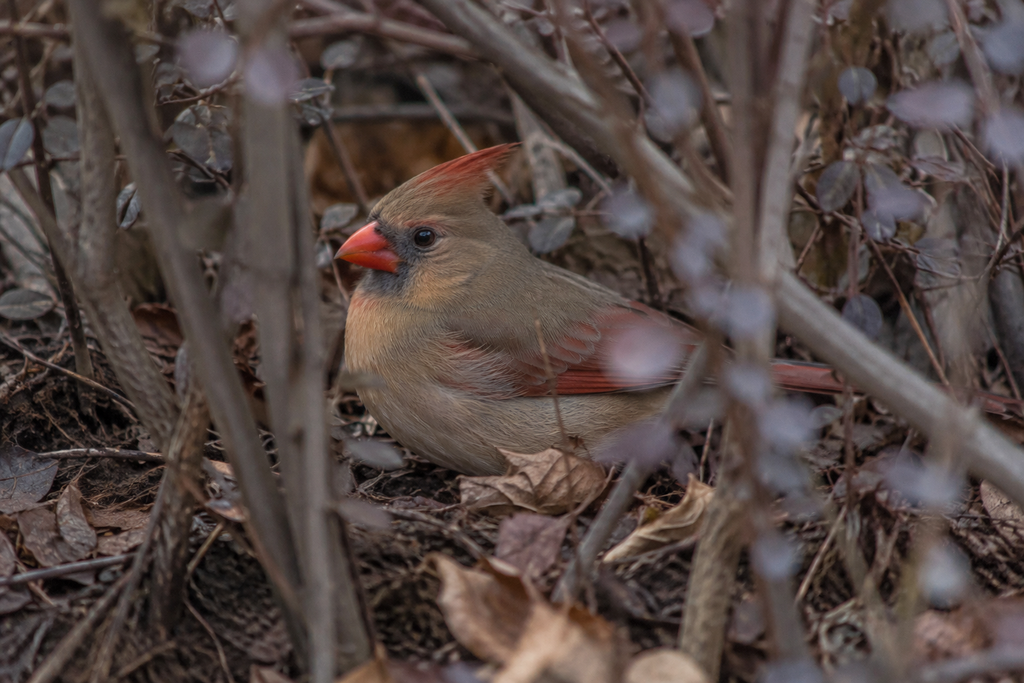
Female cardinals trade brightness for camouflage because they handle most of the incubating — sitting still in low shrubs for roughly 11 to 13 days, right where a hawk or snake would love to spot movement. Muted tan and brown plumage with subtle red on the wings, tail, and crest keeps her hidden. She also sings full, complex song from the nest, unusual among female North American songbirds, to tell her mate when she or the chicks need food.
Here’s the part people miss: her coloring isn’t a downgrade, it’s a different job description. A blazing red bird sitting motionless in a shrub for two weeks is a target. A brown, mottled one mostly disappears.
She’s not colorless, though. Look closely and there’s real red in her — washed through the wings, the tail, the crest — just toned down instead of maxed out. And according to the Cornell Lab of Ornithology’s All About Birds, she’s doing something most female songbirds in North America don’t do at all: singing full song, not just call notes, often while sitting on the nest to signal the male about food. Quiet doesn’t mean passive.
What’s Actually Happening at the Genetic Level?
Both sexes carry the same CYP2J19 gene — she’s not missing the instructions, she’s just not running them the same way. The 2020 Harvard-led genome study, headed by researcher Simon Yung Wa Sin, identified hormone-sensitive regulatory regions near the gene, suggesting androgens control how much yellow carotenoid gets converted into red. Higher testosterone drives fuller conversion in males; females’ different hormonal profile produces only a partial version.
Males, running hotter on testosterone especially during breeding season, get the full conversion and end up red from crest to tail. Females get enough to leave those warm washes on the wings and crest, not enough to flood the whole body.
It’s a clean example of how one gene, one diet, and one hormone system can produce two birds that don’t look related, let alone married.
What Happens When a Cardinal Is Neither Fully Male Nor Female?
Occasionally someone photographs a cardinal split straight down the middle — red on one side, brown on the other. This is bilateral gynandromorphy, caused when an egg cell develops with two nuclei, one carrying a Z chromosome and one carrying a W, each fertilized separately by Z-carrying sperm. The result is a bird genetically male on one side and female on the other — visible precisely because cardinal plumage differs so sharply between the sexes.
Birds don’t determine sex the way mammals do. Females carry one Z and one W chromosome; males carry two Z’s. Ornithologists sometimes call these split birds “half-siders.” They’re rare, but they’re not a one-time fluke — a handful get documented and reported almost every year, mostly because cardinals make the anomaly so easy to see.
Next time two cardinals show up at the feeder together, it’s worth sitting with the mismatch for a second instead of rushing past it. One bird is broadcasting; the other is quietly running the operation. Both are doing exactly what they evolved to do, and neither drew the short straw.