
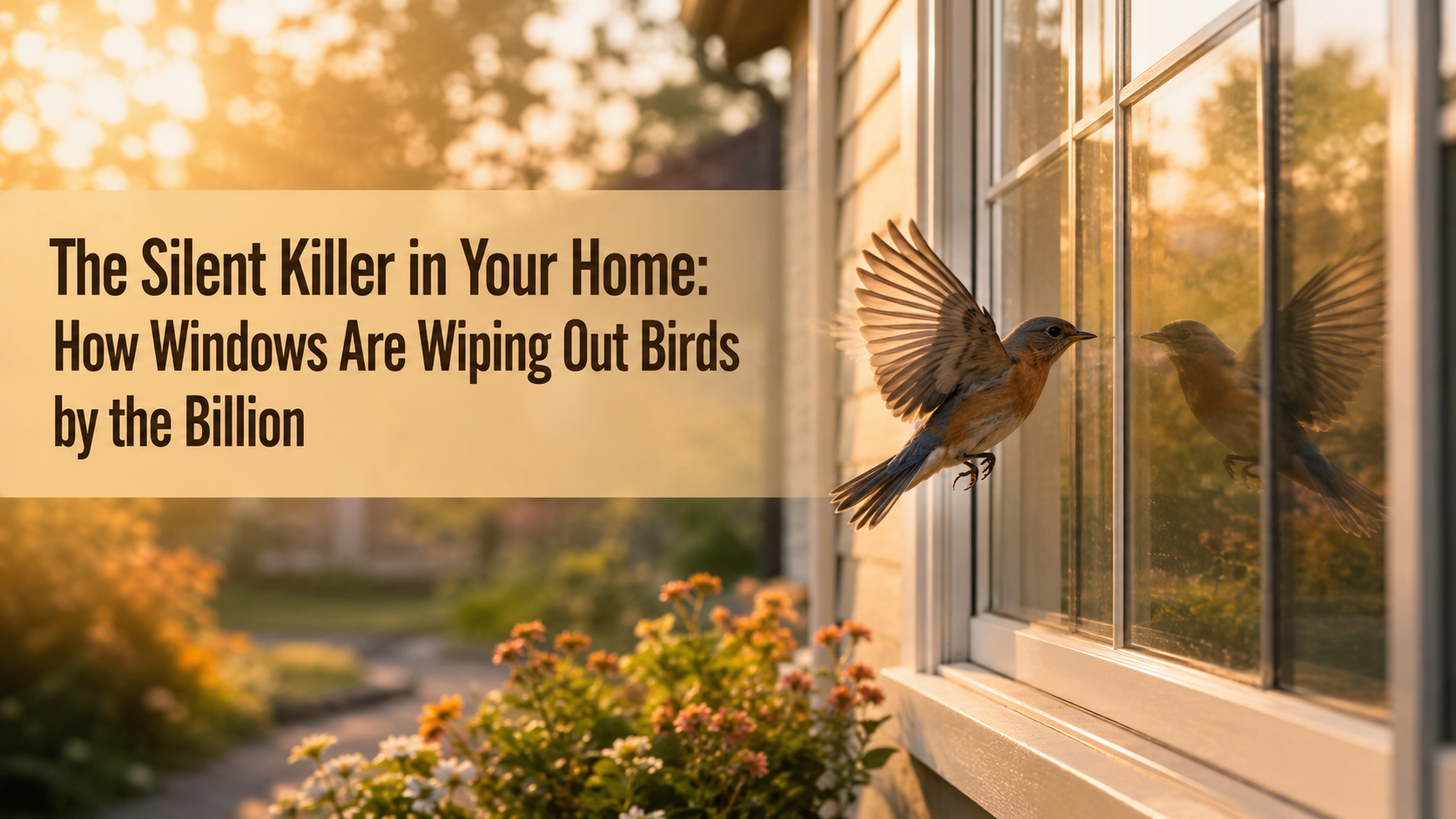
You’ve probably heard it before. A soft thud against the glass. Maybe you get up to check, find nothing on the ground, and assume the bird shook it off and flew away. That’s what most of us assume. New research says we’ve been wrong about this for a long time.
A study published in PLOS ONE examined outcomes for more than 3,000 birds injured in building collisions and brought to wildlife rehabilitators across multiple US states. The findings were startling. Only 40 per cent of those birds survived, even with expert care. The other 60 per cent died, either immediately or in the days that followed, from injuries that looked minor on the surface but weren’t.
What that survival rate means at scale is what researchers are now grappling with. Previous estimates put annual bird deaths from window collisions somewhere between 365 million and 988 million in the United States. Those figures were based largely on counting birds found dead at building bases. The new research suggests that method missed most of the deaths entirely, because most injured birds fly away before dying somewhere else. When researchers applied the 60 per cent mortality rate to the full picture, the number they reached was well over one billion birds per year.
One billion. In a single country. Every year.
Why Does Glass Kill So Many Birds?
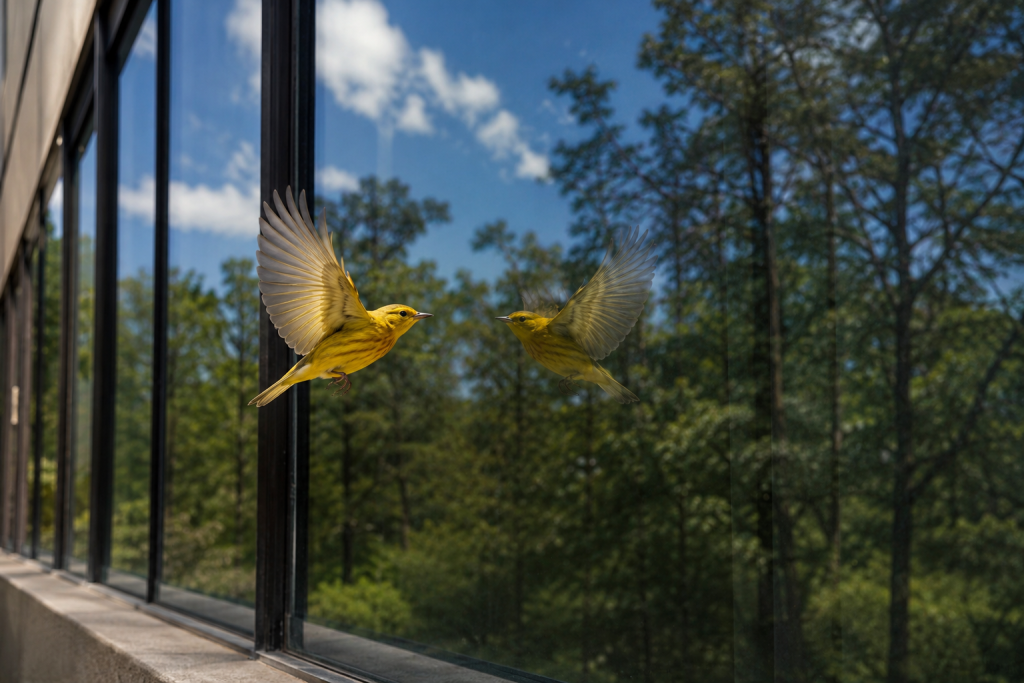
Glass kills birds because they cannot distinguish a window reflection from real sky or vegetation. A bird flying toward what looks like open space hits solid glass at up to 20 miles per hour, causing internal injuries, eye damage, brain bruising, and fractures that are invisible from the outside. Most injured birds fly away from the collision site before dying, which is why building-based body counts have always vastly underestimated the true death toll.
To a bird, glass doesn’t look like glass. It looks like sky, or trees, or open space. Windows reflect the world around them, and birds can’t distinguish a reflection from the real thing. A warbler flying toward what appears to be a gap in the vegetation is actually flying toward a solid pane at 20 miles per hour.
Mason Youngblood, a co-author of the PLOS ONE study from Stony Brook University, described the problem plainly: “We’ve all witnessed birds collide with buildings, shake it off, and fly away. It’s natural to assume that these birds survive, but our research reveals a stark reality — most of these birds die shortly after.”
The study found that most birds arriving at rehabilitation centres after window strikes were otherwise healthy. No disease, no prior injuries, no signs of weakness. They were birds in good condition that flew into the wrong surface at the wrong moment. Unseen injuries, including eye ulcers, haemorrhaging, and spinal trauma, prevented them from continuing their migration or finding food. They died days later, far from where the collision happened.
That’s why counting dead birds at building bases has always been an undercount. The building isn’t where most of them die.
Which Birds Are Most at Risk From Window Strikes?
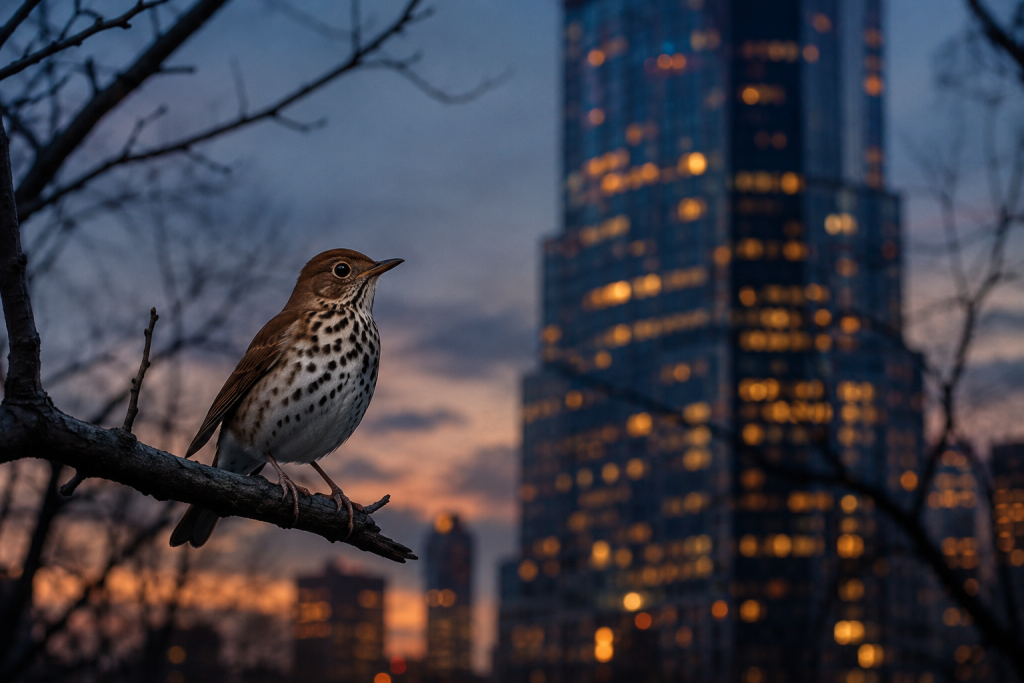
Window strikes kill indiscriminately, with no preference for weak or unhealthy birds. Warblers, thrushes, sparrows, vireos, and hummingbirds are among the most commonly recorded victims. Many are long-distance migrants that cannot afford to lose days recovering from a collision. Spring and autumn migration seasons are the most dangerous periods, as billions of birds move through urban areas at the same time buildings present the greatest glass hazard.
The timing matters significantly. Migration seasons push enormous numbers of birds through urban and suburban areas at the same time that city buildings, office parks, and suburban homes present the greatest glass hazard. Birds navigating at night use artificial light to orient themselves, and glass walls reflecting lit-up skylines can pull them off course.
Some of the species losing the most birds to window strikes are already in decline. The wood thrush has lost nearly 60 per cent of its population since 1966. The chimney swift is down by more than half. For species already under pressure from habitat loss and climate disruption, a billion-bird annual death toll from glass is a compounding problem, not an isolated one.
What Actually Stops Window Strikes?
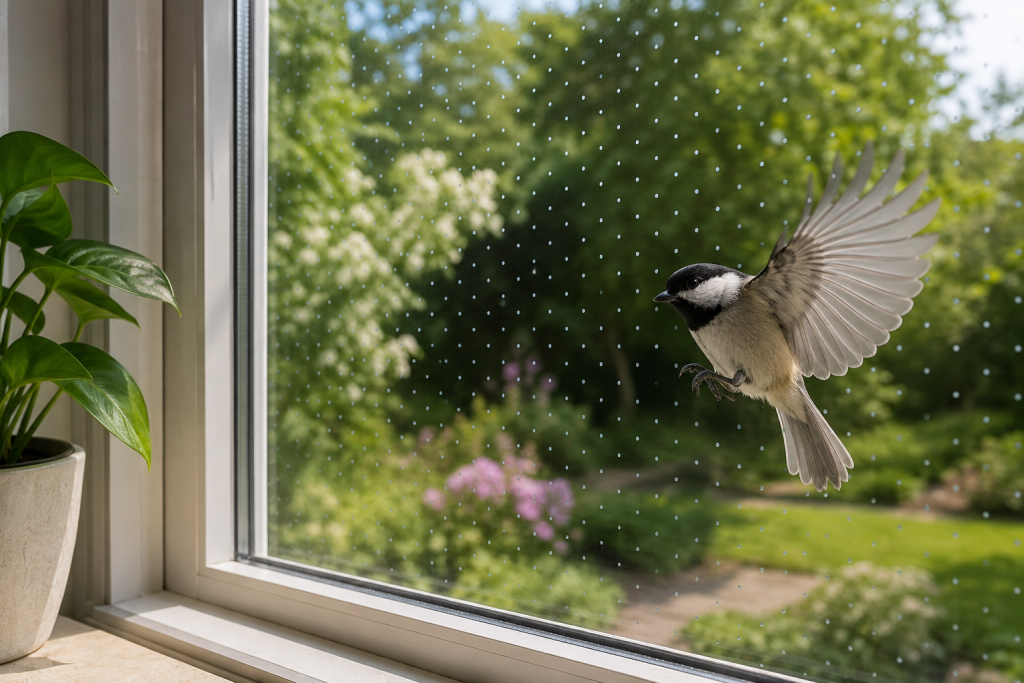
The most effective solutions are external screens, window films applied in a grid pattern no more than 2 inches apart horizontally and 4 inches apart vertically, and relocating bird feeders to within 3 feet of windows so birds cannot build up fatal speed. Individual window treatments cost a few dollars and can be installed in minutes. Bird-friendly glass standards now exist for new construction, though adoption across US cities remains limited.
External screens are one of the most effective options available. Stretched across the outside of a window, they break up the reflection and cushion any bird that makes contact. They’re not the prettiest solution, but they work consistently.
For something less visible, window films and decals applied in a close grid pattern on the outside of the glass alert birds to the surface without significantly affecting the view from inside. The spacing matters: a few random stickers in the corners, the most common DIY attempt, don’t do enough.
One counterintuitive fix is moving bird feeders closer to windows, not further away. Feeders within 3 feet of a window mean birds can’t build up the speed that causes fatal impacts. Feeders at 15 to 30 feet are in the danger zone, far enough away that birds are flying at full speed when they approach the glass.
At a larger scale, the American Bird Conservancy has been pushing for patterned and fritted glass in new construction for years. A small number of cities have adopted bird-safe building standards. Progress is slow, but the standards exist.

Why Does This Problem Keep Being Underestimated?
Window strikes kill over a billion US birds annually, but the death toll stays largely invisible because most birds fly away from the collision site before dying elsewhere. Previous estimates based on body counts at building bases missed the majority of deaths. A 2025 PLOS ONE study of 3,000+ collision victims revealed only a 40 per cent survival rate even with professional rehabilitation care, forcing a significant upward revision of existing mortality figures.
Part of the problem is that the death toll is invisible. Birds don’t die dramatically in front of us. They shake themselves off and disappear, and we assume they’re fine. The PLOS ONE research has put a number on what we were missing, and it’s bigger than almost anyone expected.
What gets me about this issue is how fixable it is. A roll of window film costs a few dollars. An exterior screen costs a bit more. The knowledge is out there. The products exist. A billion birds a year are still dying.
If you have large windows at home, particularly ones that face trees or open sky, it’s worth checking them. Not every window is a risk, but some are, and the fixes are simpler than most people realise.