
Bats are not blind. All of the world’s 1,400-plus bat species have working eyes, and many see better than humans in low light. Some can even detect ultraviolet light. Bats that use echolocation rely on it alongside their vision, not instead of it, combining sound and sight to navigate in the dark.
I grew up believing bats were blind. Not “had poor eyesight,” but properly blind, flapping around in the dark and relying entirely on some mysterious sixth sense to avoid crashing into things. The phrase “blind as a bat” was just one of those facts you absorbed young and never thought to question.
So when I finally looked into it, I felt a little cheated. Because not only are bats not blind, some of them see considerably better than I do.
It turns out this is one of the most stubborn myths in the animal world, and the truth underneath it is far stranger and more interesting than the myth ever was.
Why Do People Think Bats Are Blind?
The myth comes from watching bats fly confidently in near-total darkness. Because they hunt at night and many use echolocation to navigate, people assumed they couldn’t see at all and relied only on sound. The logic seemed sound: why would a creature need eyes if it “sees” with sound? But the assumption was wrong. Nocturnal skill is not the same as blindness.
Most animal myths start somewhere reasonable, and this one is no exception. Bats are nocturnal. They hunt and fly in near-total darkness, threading through trees and snatching insects out of the air with a precision that seems impossible without something guiding them.
For a long time, people watched this and drew the obvious conclusion. If an animal can move that confidently in the dark, surely it isn’t using its eyes at all. And once bats became linked with echolocation, that strange ability to “see” with sound, the assumption hardened into a fact.
The leap felt logical. It was also wrong.
Can Bats Actually See?
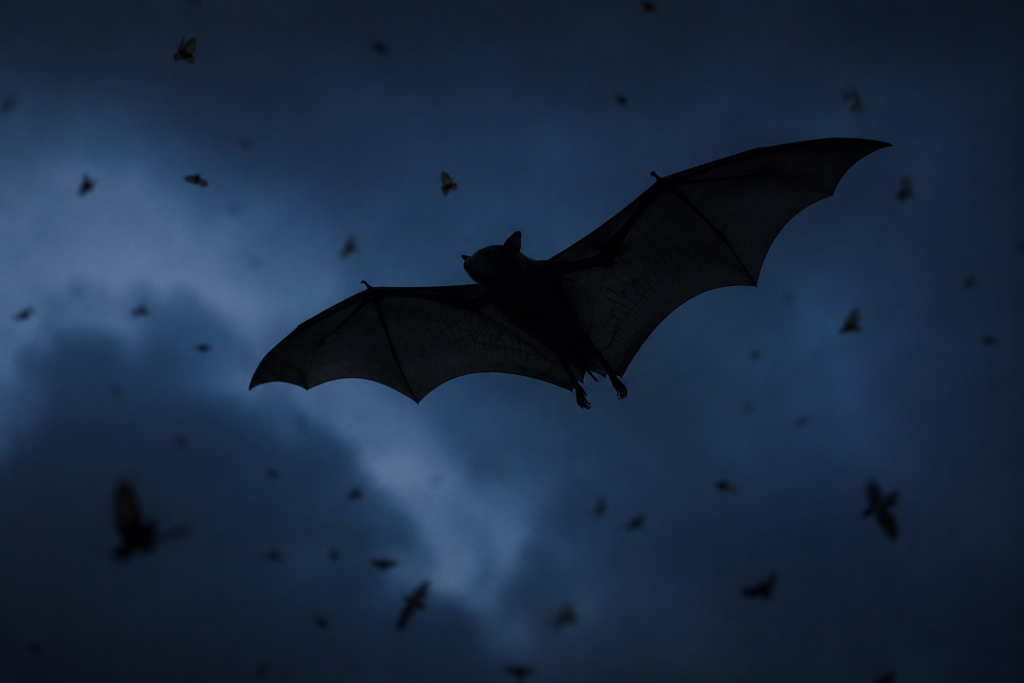
Nearly all bats see well, and some see remarkably well. There are over 1,400 bat species, and not one is truly blind; they all have functioning eyes. Large fruit bats (megabats) often have excellent vision, and many don’t echolocate at all. Smaller insect-eating bats (microbats) have smaller eyes but still see, using vision and sound together.
What varies between species is how much each one leans on its eyes versus its other senses, and that variation is where the real story lives.
Broadly, bats fall into two camps. The larger fruit bats, sometimes called megabats, tend to have excellent eyesight. Many of them don’t echolocate at all and navigate almost entirely by vision. Some fruit bat species reportedly see around three times better than humans in low light. There are even bats, like the California leaf-nosed bat, whose night vision has been compared to military-grade night vision equipment.
Then there are the smaller, insect-eating microbats. These are the ones most associated with echolocation, and their eyes are usually smaller. But smaller does not mean useless. They still see, and research increasingly shows they use vision and sound together rather than relying on one alone.
Can Bats See Colour and Ultraviolet Light?
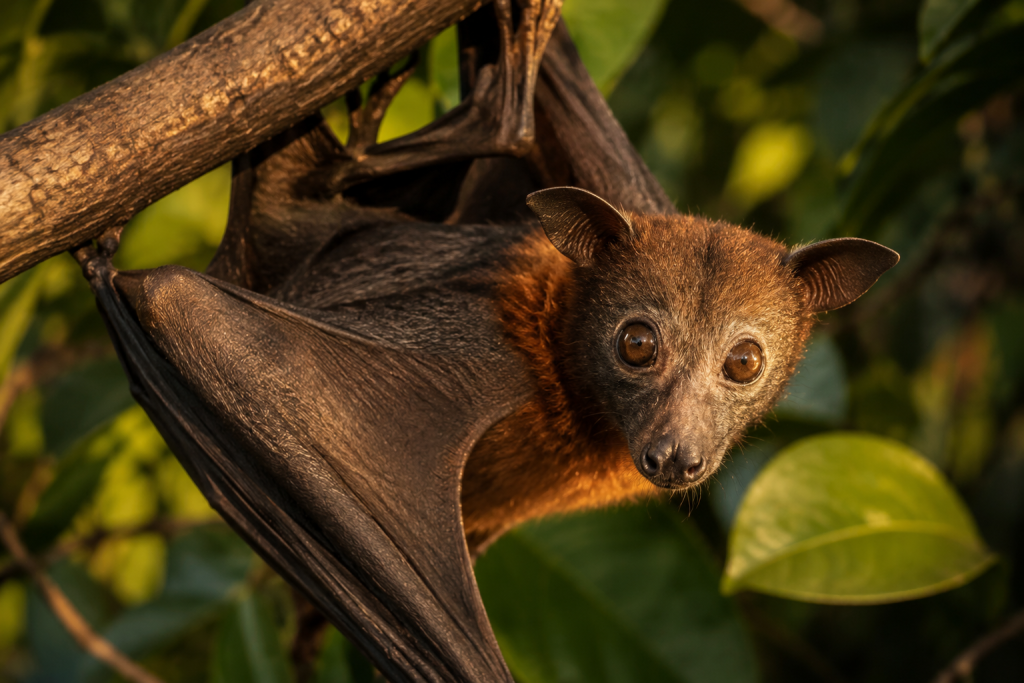
Many bats see in colour, and some can detect ultraviolet light invisible to humans. A study of vision genes across 111 bat species found that many retain functional colour vision and a good number can still perceive UV, which helps certain fruit bats locate flowers and food. Far from losing their sight, these bats have vision specially tuned to their environment.
Here’s the detail that stopped me when I first read it. Some bats perceive a part of the light spectrum that is completely invisible to us.
So the picture isn’t “bats are blind.” It’s closer to “bats see things we can’t even imagine.”
What Does Echolocation Actually Do for Bats?
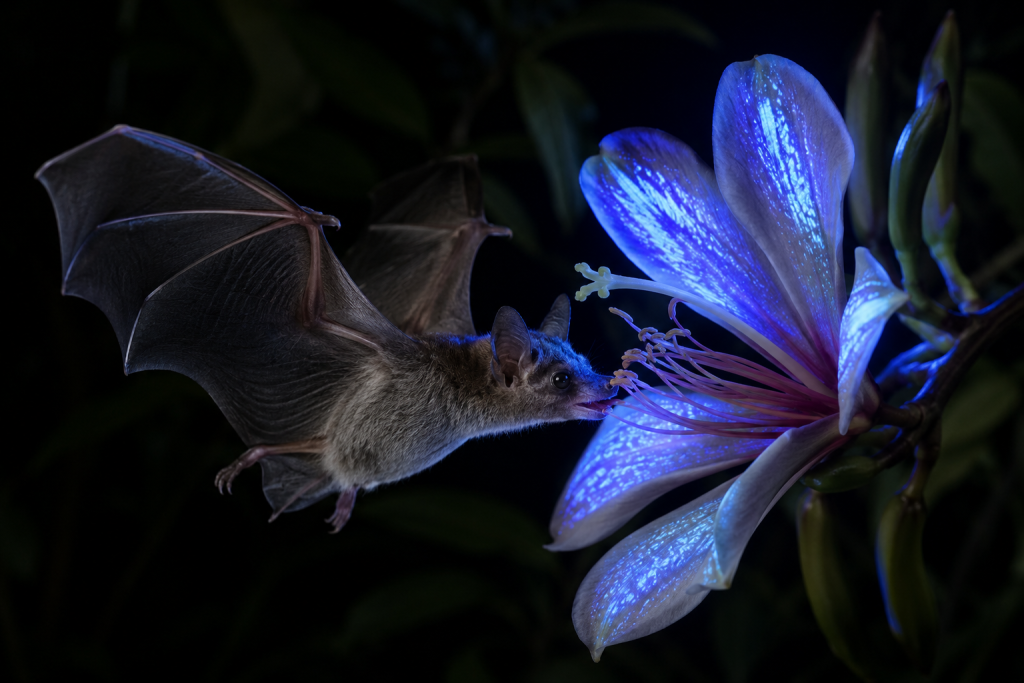
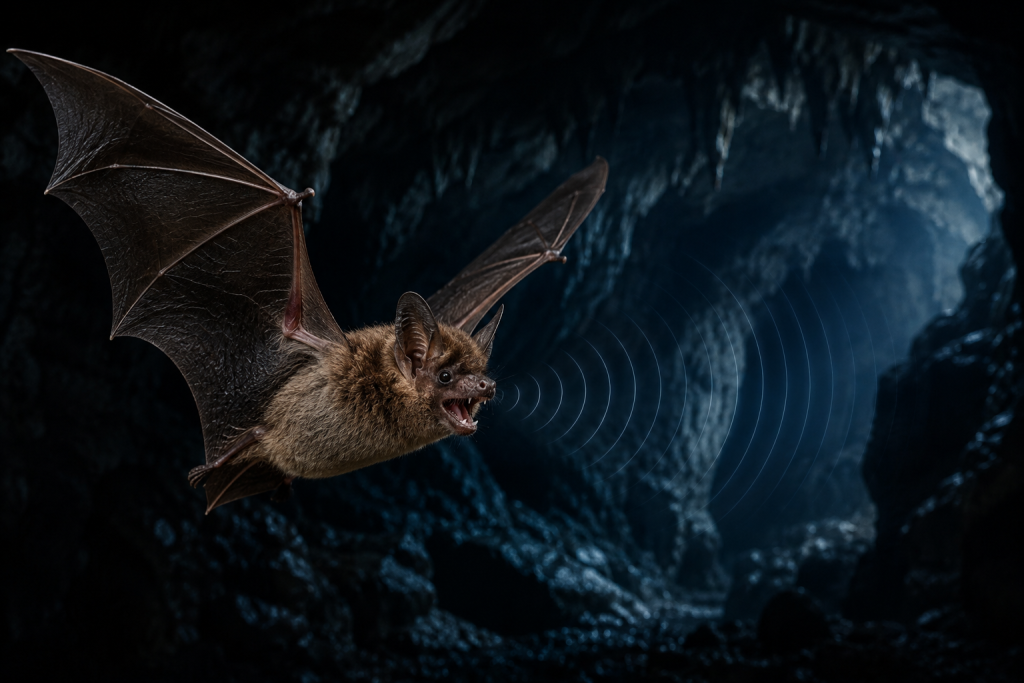
Echolocation lets bats navigate and hunt in complete darkness by emitting high-frequency clicks and reading the returning echoes to map their surroundings. It is extraordinarily precise: some bats can detect an object as thin as a human hair. Crucially, echolocation supplements vision rather than replacing it. Bats use sound and sight together, even in daylight.
If bats can see, why do so many of them bother with echolocation at all? Because eyesight, however good, has limits in pitch darkness. Echolocation is how many bats fill that gap.
A bat emits high-frequency clicks, usually far above the range of human hearing, and listens for the echoes bouncing back off everything around it. From the time those echoes take to return, and the way they change, the bat builds a detailed map of its surroundings. Some species can even tell different insects apart purely from the echoes they produce.
The crucial word, though, is supplement. In one striking study, Egyptian fruit bats kept using echolocation to avoid obstacles even in bright daylight, when they could clearly see perfectly well. They weren’t choosing between two senses. They were using both at once.
That’s a long way from a blind animal stumbling through the dark.
Why Does the “Blind as a Bat” Myth Matter?
The myth matters because it frames bats as clumsy, deficient creatures, when they are among the most sensory-sophisticated mammals alive. This misperception fuels fear and undervalues them. Bats are vital to ecosystems: insect-eating species consume vast numbers of pests and mosquitoes, while fruit bats pollinate plants and disperse seeds that help forests regenerate.
Myths like this shape how we feel about an animal. “Blind as a bat” frames bats as clumsy, deficient creatures fumbling around in the night. The reality is the opposite. They are equipped with vision tuned to darkness and a sound-based navigation system so accurate it borders on the unbelievable.
And bats do far more good than most people realise. Insect-eating bats devour enormous quantities of mosquitoes and crop pests every night, quietly saving farmers money and keeping insect populations in check. Fruit bats pollinate plants and scatter seeds across huge distances. When we dismiss them as blind, spooky little things, we miss how much they actually do for the world around us.
The Truth is Better Than the Myth
This is the thing I keep coming back to with animal myths. The made-up version is almost always less impressive than the real one.
“Blind as a bat” gives you a fumbling creature. The truth gives you an animal that can see in colour, sometimes into the ultraviolet, that navigates by painting pictures with sound, and that can pick a hair-thin obstacle out of the dark while flying at speed.
So the next time someone reaches for that old phrase, you’ll know. Bats aren’t blind. They’re seeing the world in ways we’re only beginning to understand.
I was recommended this blog by way of my cousin. I am no longer sure whether this put up
is written through him as no one else know such exact about my problem.
You are incredible! Thanks!