
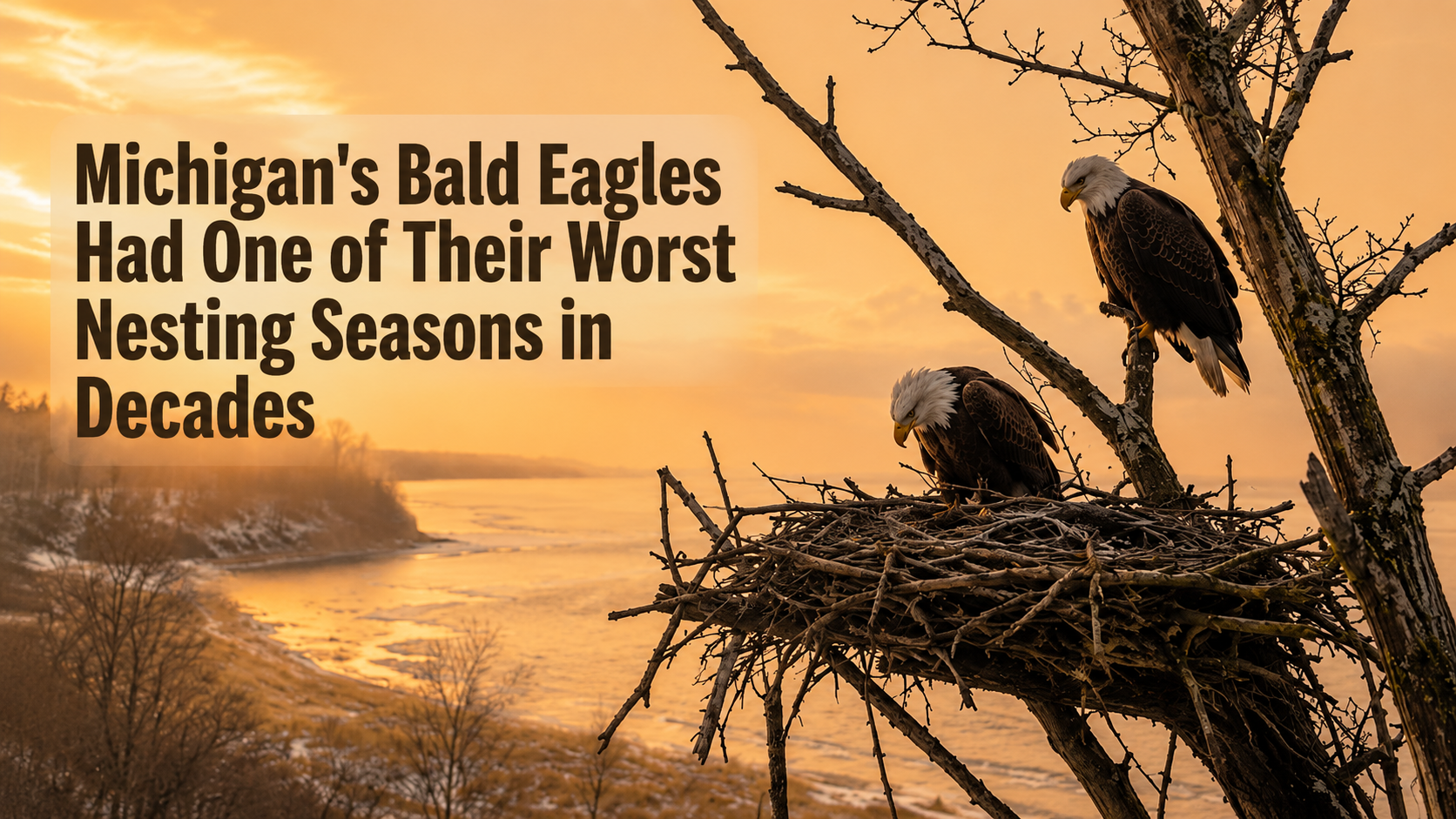
Something is wrong with Michigan’s bald eagles this spring, and the researchers who know these birds best are concerned.
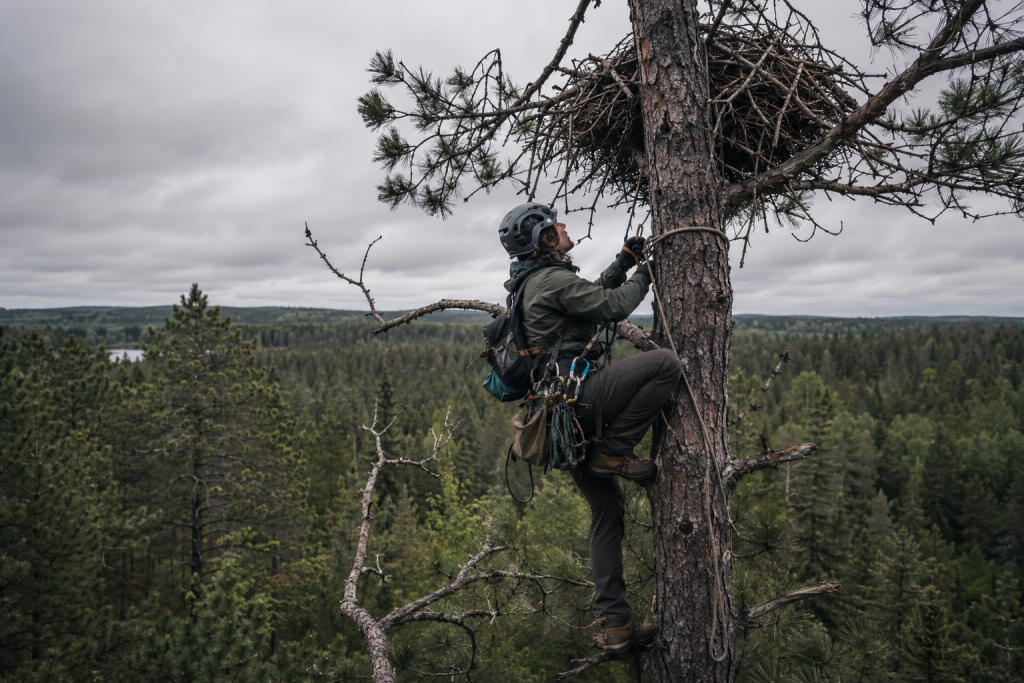
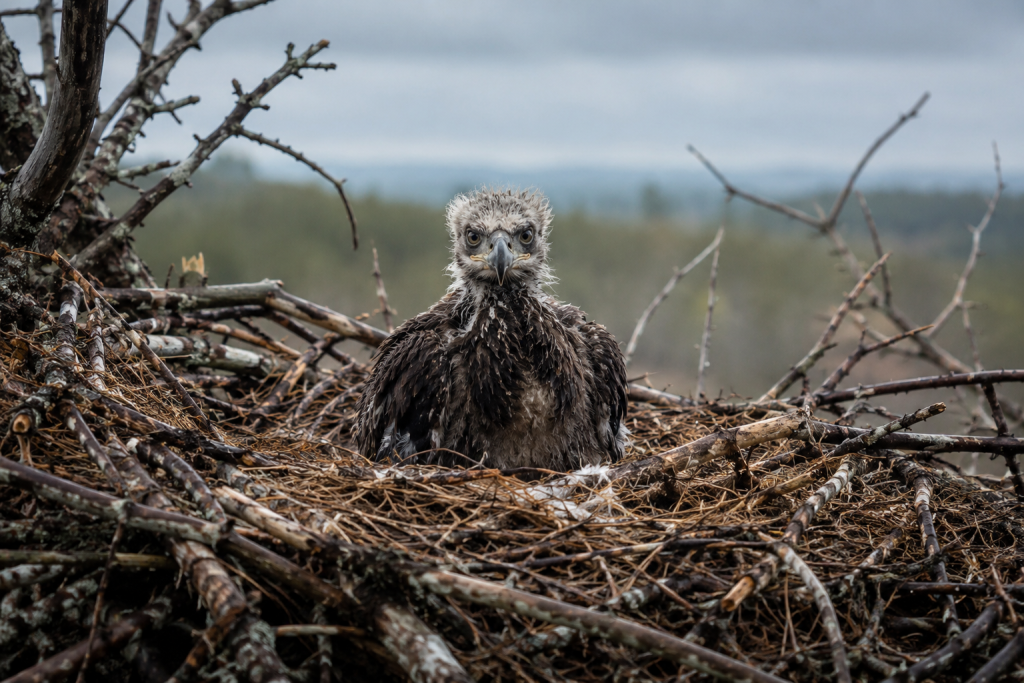
Field crews who have spent decades climbing trees and banding eaglets across the state are reporting a nesting season unlike any they’ve seen before. Empty nests where young birds were documented just last year. Malnourished eaglets. Damaged nesting sites. Adult eagles, in some cases, attempting to nest a second time after the first round failed. Bill Bowerman, a professor of wildlife ecology and environmental toxicology who has tracked Michigan’s eagle population for years, recently went three days in the field without finding a single active nest. “Our initial impressions are that this is not a typical year,” he said.
That’s an understatement, given what Michigan’s bald eagles have been through to get here.

How Did Bald Eagles Almost Go Extinct in the United States?
Bald eagles nearly vanished from the lower 48 states due to habitat loss, hunting, and the widespread use of DDT, a pesticide that caused eggshells to thin and crack during incubation. By the early 1960s, fewer than 500 breeding pairs remained. DDT was banned in 1972, and the Endangered Species Act passed in 1973. Today, roughly 14,000 breeding pairs exist, one of the most successful wildlife recoveries in US history.
Fifty years ago, the bald eagle was teetering on the edge of disappearing from the continental United States. Habitat loss played a role, as did hunting. But the biggest culprit was DDT, a pesticide used widely after World War II that accumulated in the food chain and caused eagles’ eggshells to thin so severely that they cracked under the weight of incubating parents.
The recovery that followed is genuinely one of the most hopeful stories in American wildlife history. DDT was banned in 1972. The Endangered Species Act passed in 1973. Nests were protected. Breeding programs brought birds back to areas where they’d been lost. And it worked. Michigan became a cornerstone of that recovery, home to one of the largest and most closely monitored eagle populations in the country.
For decades, long-term monitoring programs have tracked the state’s nests year after year, banding eaglets, collecting data on food sources and contaminants, watching for signs of trouble. That database is part of what makes this spring’s observations so alarming. The researchers have a baseline. They know what normal looks like. And this isn’t it.
Why are Michigan’s Bald Eagles Struggling in 2026?
Michigan’s bald eagles are experiencing widespread reproductive failure in 2026, with researchers citing a combination of severe weather and limited food availability. Unseasonal flooding and powerful wind events have damaged nests. The same conditions are making fish, the eagles’ primary food source, harder to find. Scientists have not ruled out contaminants or disease, and more than $700,000 in federal monitoring funding has been delayed, limiting researchers’ ability to track what’s happening.
Bald eagles along the Great Lakes rely heavily on fish, supplemented by waterfowl and carrion. When lake levels behave erratically, and spring weather comes in violent and unpredictable, the food supply gets disrupted in ways that ripple directly into nesting success.
Jennifer Day, executive director of Wings Over Water, a nonprofit that coordinates much of Michigan’s eagle monitoring work, put it plainly: “Every nest visit provides critical information about the health of Michigan’s waters and wildlife.” Young eagles are useful environmental indicators because they reflect the contaminants and ecological conditions present in local food systems. Healthy eaglets signal a healthy ecosystem. Malnourished eaglets signal the opposite.
Making an already difficult situation worse, more than $700,000 in federal funding expected through the Great Lakes Restoration Initiative for bald eagle monitoring has not been released this year. Wings Over Water officials say they didn’t find out the money wasn’t coming until April, well into the nesting season. “We were all under the same belief in November that this funding would be available,” Bowerman said.
Long-term wildlife monitoring programs are only useful if they’re actually long-term. A gap in data means a gap in understanding. If something significant is happening to Michigan’s eagle population right now, researchers need to be watching it, not scrambling to patch together a monitoring effort without expected resources.
Are Michigan’s Bald Eagles Endangered Again?
Researchers are not saying Michigan’s bald eagles are heading back toward endangered status. The population is large and has weathered difficult years before. One bad nesting season does not reverse decades of recovery. What concerns scientists is the combination of stressors, severe weather, food scarcity, and potential contaminants, occurring simultaneously, in a year when federal monitoring funding has been delayed.
What concerns scientists is the uncertainty about what’s driving the difficulties. Severe weather is one explanation, but weather alone rarely produces the kind of widespread reproductive failure being observed. Food scarcity is another factor, but why exactly food is scarce this season isn’t yet clear. Contaminants, disease, and other environmental stressors haven’t been ruled out.
“Long-term monitoring is the only way we can understand how these major events are affecting the population over time,” Day said.
That’s true, and it’s also the thing that funding cuts and delays put directly at risk.

What Does the Bald Eagle’s Struggle Mean for US Wildlife Conservation?
The bald eagle’s original recovery succeeded because public concern, sustained scientific monitoring, and adequate funding aligned over decades. When any part of that combination falters, whether through funding delays, worsening weather, or disrupted food webs, recovery can start to unravel. Michigan’s 2026 nesting season is an early signal that even species considered saved still require active, ongoing protection.
The same formula that saved the bald eagle works in reverse. When monitoring gets defunded, when severe weather becomes routine, when food webs get disrupted faster than wildlife can adapt, the recovery that took decades can start to fray.
Michigan’s bald eagles aren’t gone. They’re struggling in ways researchers haven’t seen before, in a year when the funding to fully understand what’s happening has been delayed. That’s worth knowing about. And it’s worth asking what comes next.